Environmental Stress Screening (ESS) and Temperature Cycling (TC) are widely used reliability verification methods for electronic products, differing significantly in core principles, stress types, and application scenarios.
ESS is a multi-stress combined screening method. It efficiently identifies potential early-stage defects by applying multiple environmental stresses simultaneously, simulating the synergistic effects of real operating conditions.
TC is a single-stress screening method. It accelerates the exposure of thermal expansion/contraction-related defects through periodic temperature variations.
Key differences are as follows:
1. Stress Types & Defect Coverage
l TC: Only applies temperature cycling stress (e.g., -55°C to +125°C). Thermal stress induced by differential material expansion/contraction detects defects directly linked to thermal matching, including solder joint fatigue, poor chip bonding, package cracks, and multi-layer dielectric splitting.
l ESS: Adopts a multi-stress superimposition strategy, synchronously applying temperature cycling, random vibration, and electrical stress (e.g., dynamic voltage switching). This coupling effect effectively exposes complex failure modes such as structural loosening, poor connector contact, microcrack propagation, and intermittent conduction failure, especially intermittent faults hard to replicate under single-stress conditions.
2. Equipment Investment & Cost
l TC: Requires only temperature test chambers, with low procurement costs, standardized operation, easy maintenance, minimal energy/labor consumption, and suitability for large-scale mass production deployment.
l ESS: Demands an integrated test platform comprising temperature control systems, vibration tables, electrical stress loading modules, and high-precision monitoring systems. Initial investment typically exceeds RMB 1 million, with high-end configurations costing several million yuan. It imposes strict requirements on site, power supply, cooling systems, and technician expertise, leading to substantially higher operational costs.
3. Application Scenarios & Industry Requirements
l TC: A routine screening method widely used in consumer electronics and industrial control equipment—fields sensitive to cost or with conventional reliability needs.
l ESS: Boasting a high defect detection rate (60%–80% for intermittent faults), it is mandated by industry standards for high-reliability sectors including aerospace, automotive electronics, military equipment, and medical devices to ensure critical system functionality.
4. Screening Effectiveness
l Studies indicate TC screens 75%–85% of defects, random vibration screens 15%–25%, while their combination (core of ESS) achieves a detection rate of up to 90%.
l ESS’s multi-stress coupling better simulates real-world comprehensive stresses, enabling more thorough elimination of early-stage failures.
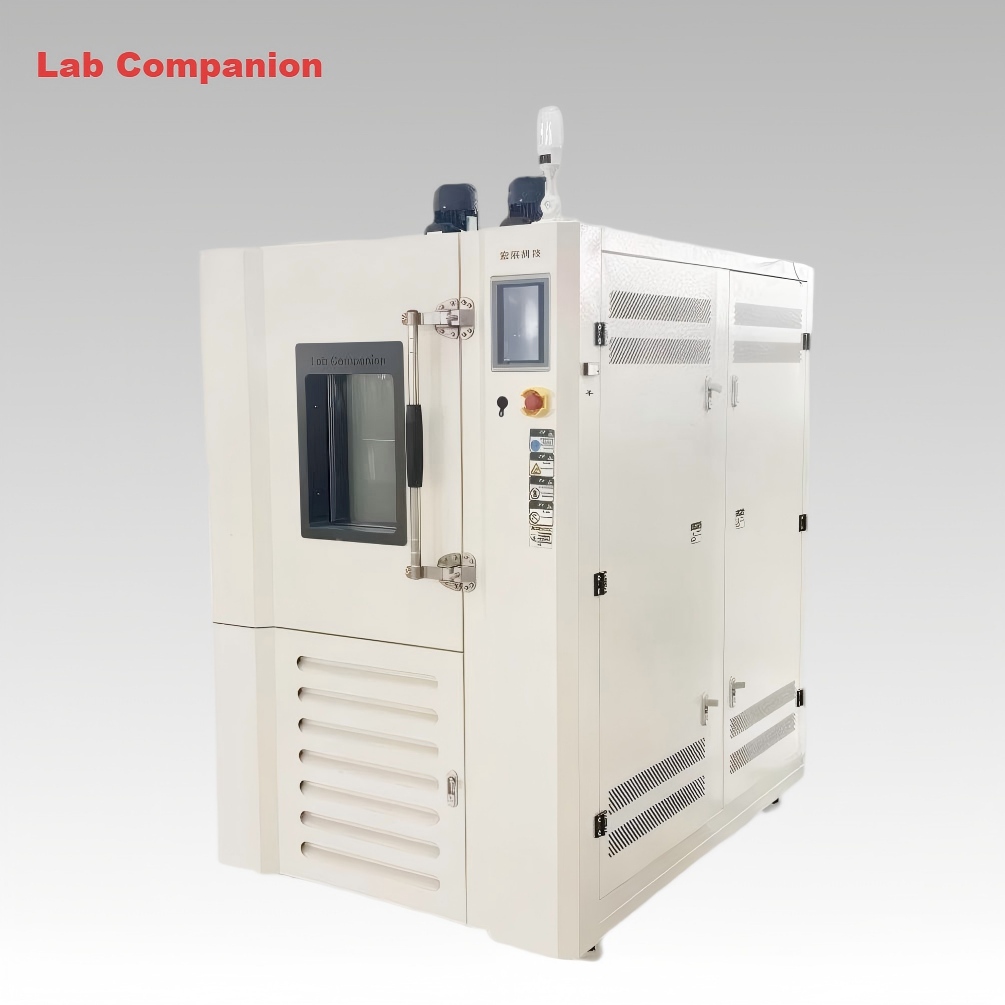
5. Lab Companion ESS & TC Test Chambers - Guangdong Lab Companion Co., Ltd.
High efficiency guarantees quality, maximizing reliability assurance.
Lab Companion ESS series complies with universal climatic test standards, offering chamber volumes from 270L to 1300L and a temperature range of -70°C to +180°C, meeting diverse customer needs. Optimal temperature change rates: 5K/min, 10K/min, 15K/min.
Your product functionality remains intact throughout production, R&D, and quality assurance. Leave reliability testing to us.




 見積もりを依頼する


 IPv6ネットワークをサポート