バナー
ホーム

急速温度変化試験室

急速温度変化試験室

  • Critical Temperature Cycling Test Compliance for New Energy & Aerospace Industries | Lab Companion Equipment Fully Meets Standards Critical Temperature Cycling Test Compliance for New Energy & Aerospace Industries | Lab Companion Equipment Fully Meets Standards
    Mar 13, 2026
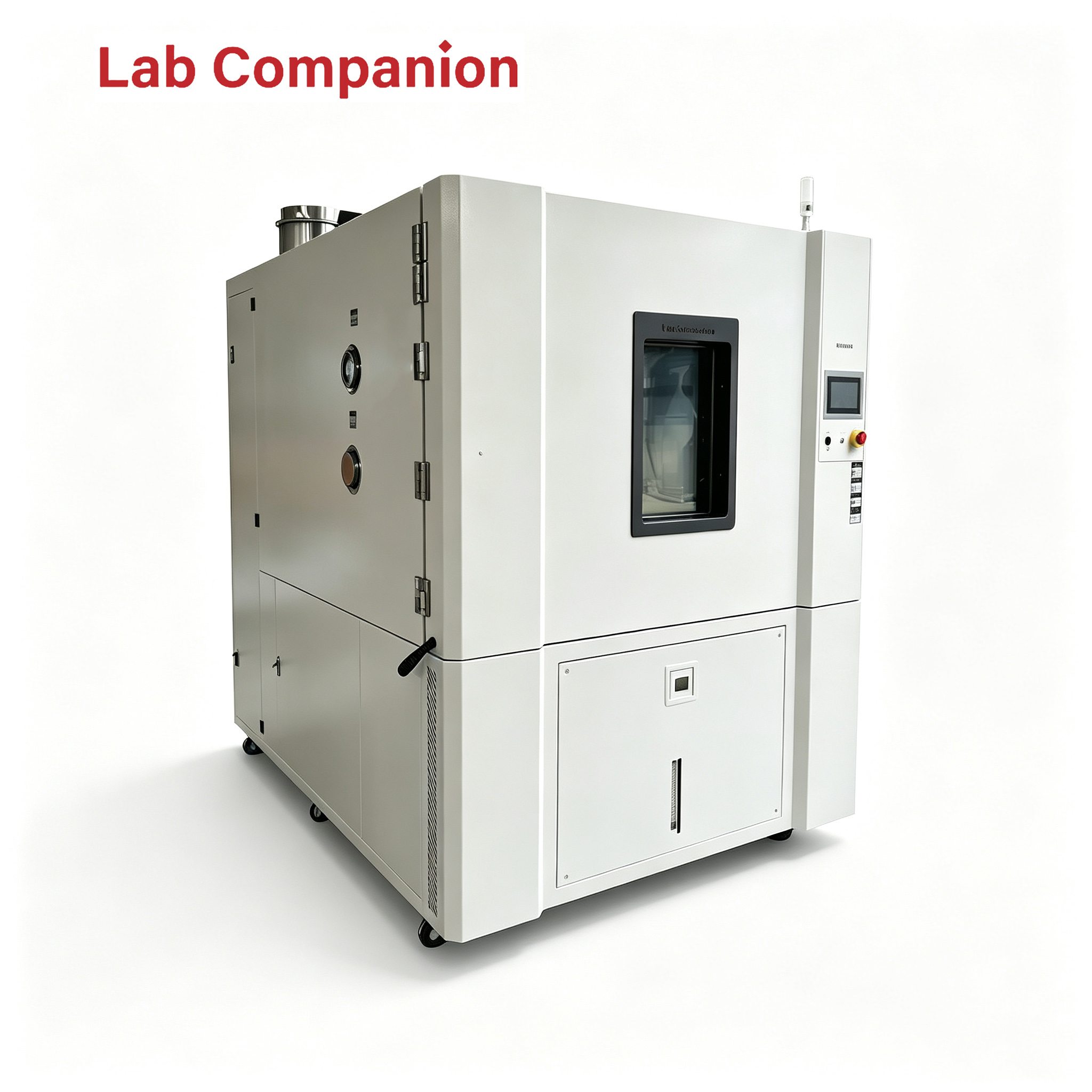
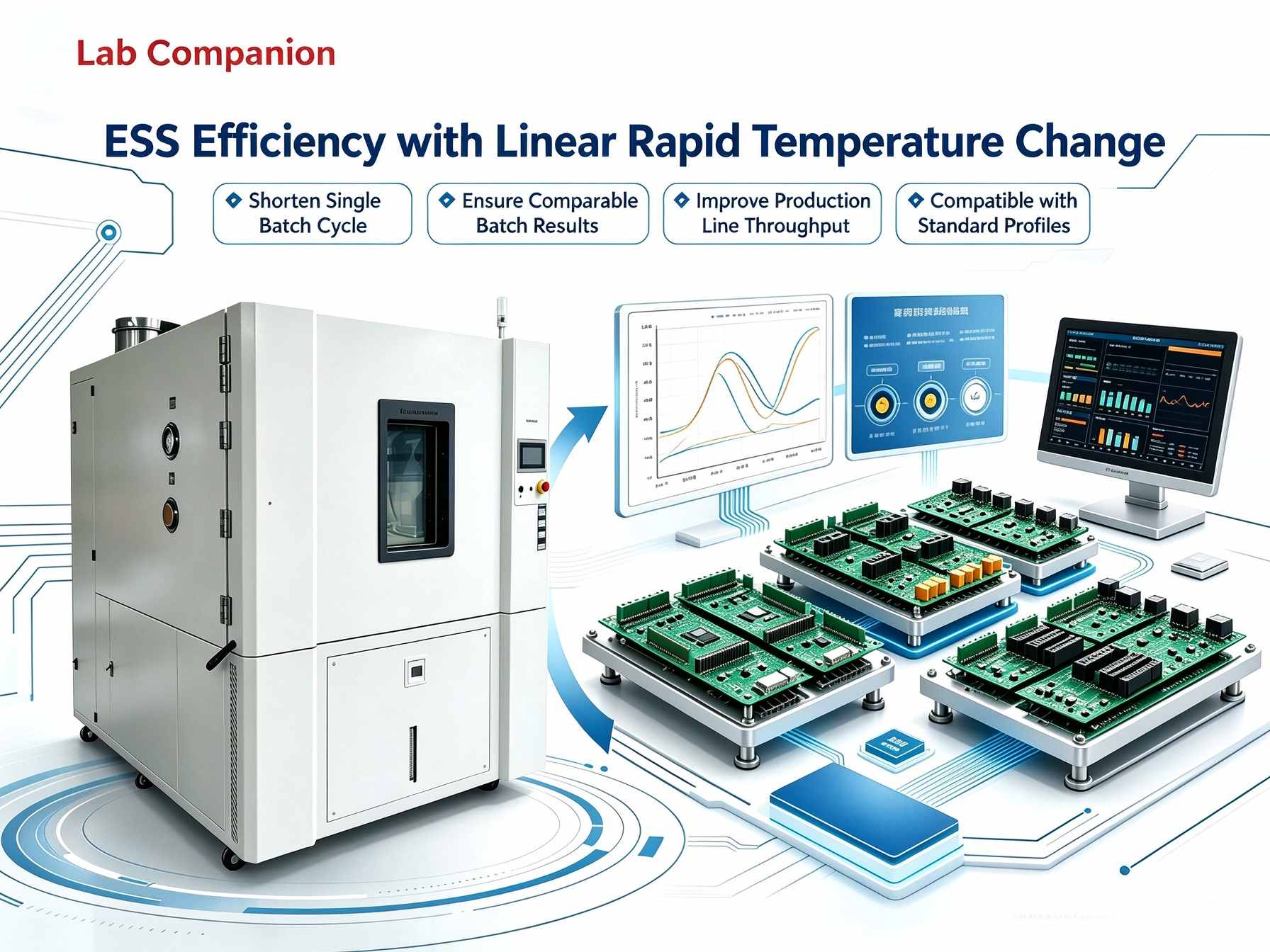
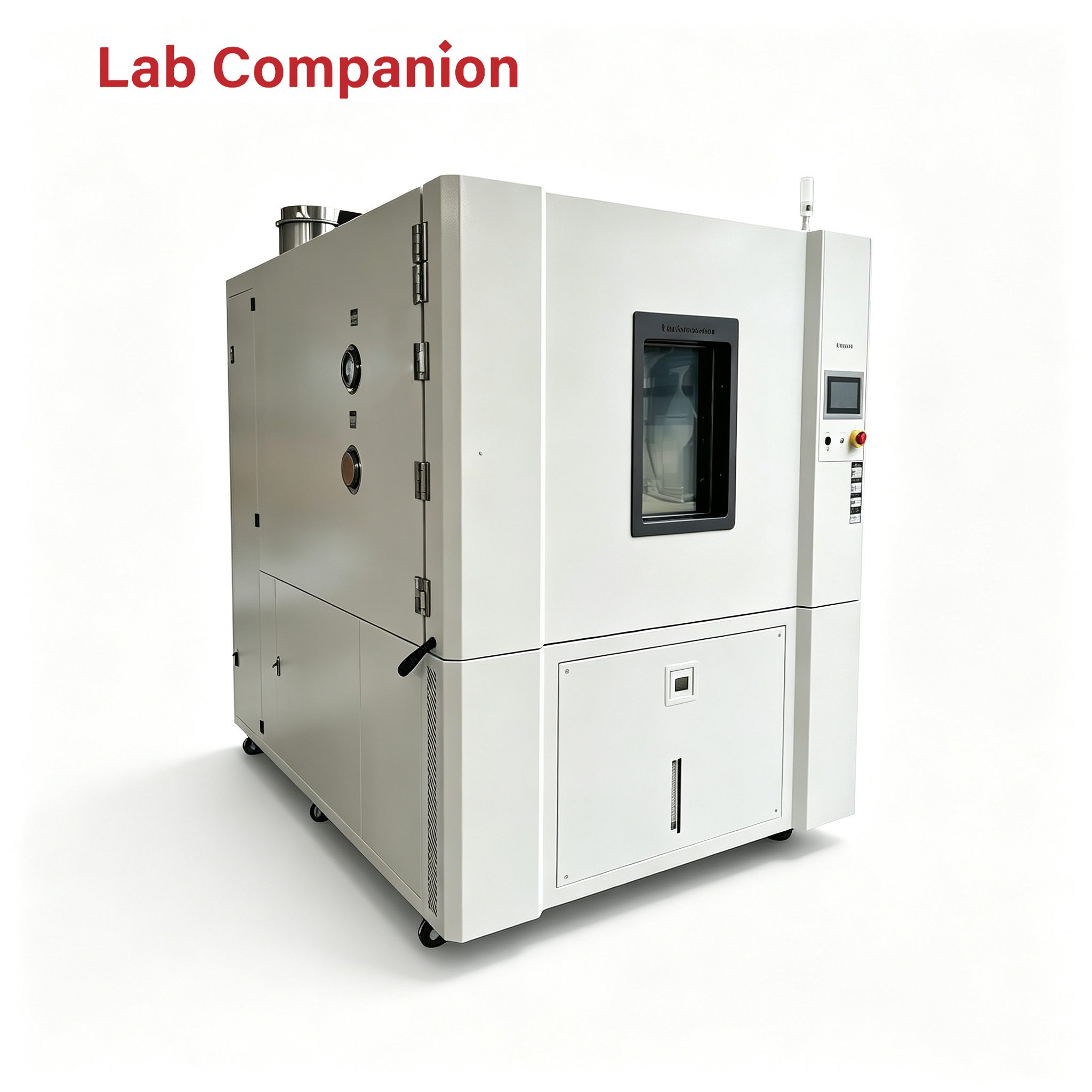
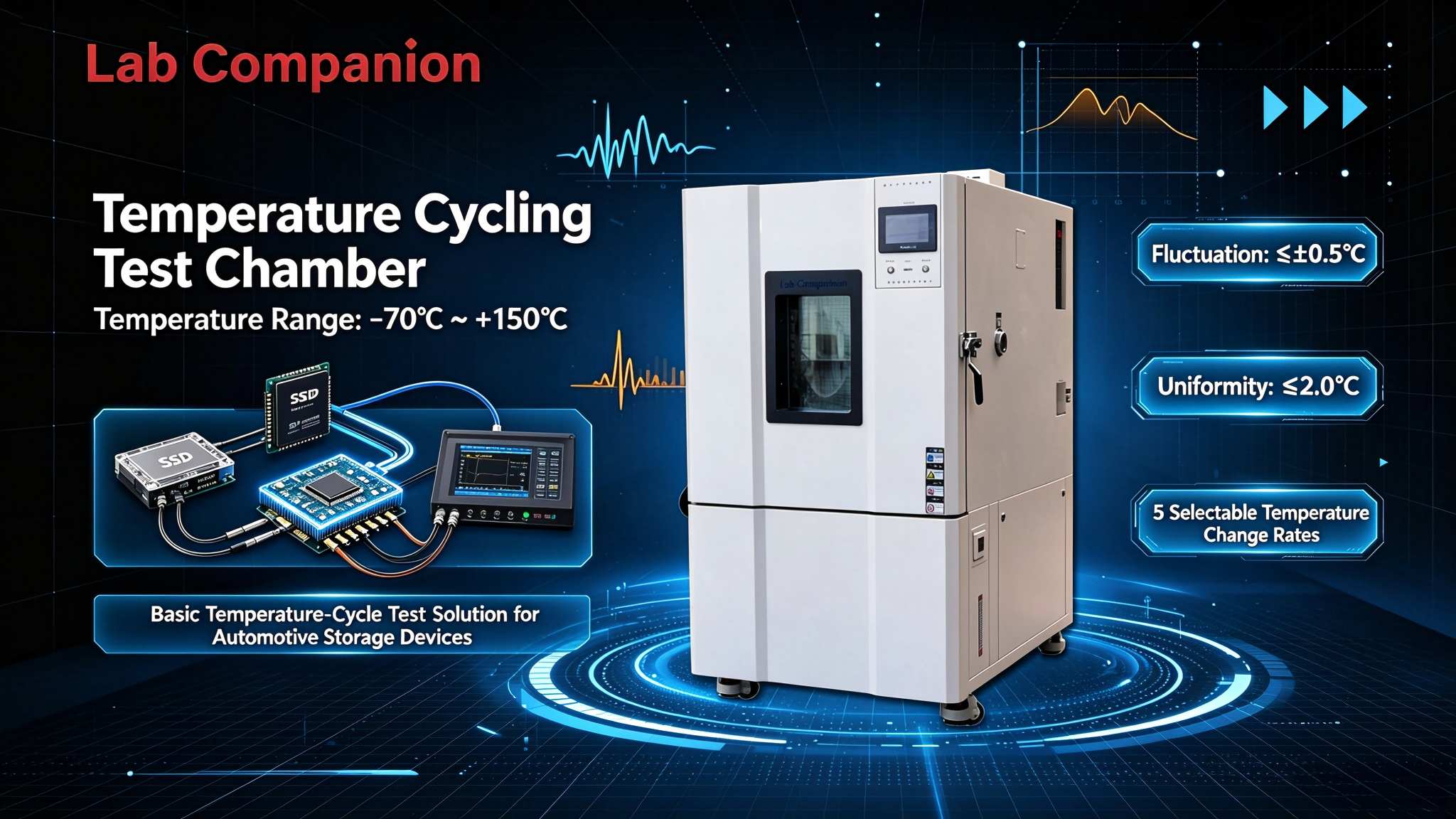
    For high-end manufacturing sectors including new energy, aerospace, and medical devices, temperature cycling test compliance is not just a regulatory requirement, but a core lifeline for enterprise survival and business expansion. Stringent specifications govern critical indicators such as temperature range, temperature control accuracy, temperature uniformity, and data traceability—from the GB/T 31485 standard for new energy batteries, GJB 150.3A military standards for aerospace components, to the YY/T 0694 standard for medical consumables. Countless enterprises suffer from repeated audit failures, delayed product launches, and even terminated partnerships due to inadequate rapid temperature change chambers that fail to meet compliance benchmarks. With 21 years of expertise in environmental test equipment, Lab Companion has developed industry-adapted rapid temperature change chambers with parameters precisely aligned with international, national, and military standards, delivering one-stop compliance solutions to help enterprises pass audits seamlessly and eliminate compliance risks. Core Compliance Pain Points: Strict Audits & Inadequate Traditional Equipment Field investigations across new energy, aerospace, and medical industries reveal three pervasive compliance bottlenecks that plague enterprises worldwide: • Substandard Precision Leading to Audit Failures: Conventional rapid temperature change chambers only offer ±1℃ temperature control accuracy and ≥±3℃ temperature uniformity, which fall far short of the precision requirements of national and military standards. Inaccurate and non-standard test data result in repeated retesting and persistent audit rejection, hindering R&D and market launch schedules. • Limited Temperature Range & Poor Adaptability: Aerospace testing demands extreme temperature ranges of -70℃ to 220℃, while medical and new energy applications require customized temperature intervals. Traditional chambers feature fixed temperature ranges with no flexibility, making them unfit for cross-industry and multi-scenario testing. • Non-Traceable Data & Unqualified Reporting: Regulatory audits mandate full data traceability and verifiable test reports. Most legacy equipment has limited data storage capacity, cannot generate standardized compliant reports, and lacks integration capabilities with enterprise audit systems, creating bottlenecks in compliance verification. Compounding these issues, wide disparities exist across industry compliance standards, making universal rapid temperature change chambers incapable of meeting diversified requirements. Purchasing multiple dedicated devices for different sectors drastically inflates procurement and operating costs, especially burdening small and medium-sized enterprises. Many are forced to miss business opportunities or face regulatory penalties, trapped in the dilemma of “high compliance costs vs. severe risks of non-compliance”. Key Industry Compliance Requirements: Clear Standards for Core Sectors While temperature cycling test specifications vary by industry, they all center on three core dimensions: temperature range adaptability, temperature control precision, and data traceability. Lab Companion rapid temperature change chambers are engineered to match these critical indicators, fully satisfying compliance demands for major industries as detailed below: 1. New Energy Industry (GB/T 31485 Standard) Focused on power battery safety performance, this standard requires a stable temperature range of -40℃ to 85℃, temperature control accuracy ≤±0.5℃, temperature fluctuation ≤±0.5℃, and temperature uniformity ≤±2℃. Test data must be storable and exportable with full traceability to ensure compliant temperature cycling testing during battery charge-discharge cycles and guarantee product safety. 2. Aerospace Industry (GJB 150.3A & GJB 150.4A Military Standards) Designed for simulating extreme high-altitude temperature environments, these military standards mandate an expandable temperature range up to -70℃ to 220℃ and ultra-high temperature control accuracy of ±0.1℃. Real-time data uploading and full-process traceability are required to verify the structural stability and performance reliability of aerospace components under rigorous military audit criteria. 3. Medical Device Industry (YY/T 0694 Standard) Tailored for medical consumables safety, this standard specifies a flexible temperature range of -60℃ to 150℃, temperature control accuracy ≤±0.5℃, and temperature uniformity ≤±2℃. Test reports must comply with industry regulatory formats to ensure the safety and stability of medical consumables under varying temperature conditions. Lab Companion Compliance Solutions: Precision-Engineered for Seamless Audit Passing Targeting industry-wide compliance pain points, Lab Companion rapid temperature change chambers feature core technical advantages to deliver one-stop compliant testing solutions with no retrofitting needed—ready for operation immediately upon startup to streamline audit processes. ✅ Wide Adjustable Temperature Range for Full Scenario Adaptation The chamber offers a standard temperature range of -70℃ to 180℃, customizable to expand up to -70℃ to 220℃ to meet extreme aerospace testing demands. Flexible temperature interval adjustment caters to the differentiated testing standards of new energy and medical industries. Equipped with a binary cascade refrigeration system and high-efficiency heating module, the temperature change rate is adjustable between 10-20℃/min, perfectly matching both rapid and gradual temperature cycling test standards. ✅ Ultra-High Precision Temperature Control for Reliable Data Integrated with Lab Companion’s self-developed dual PID closed-loop control system and high-precision PT100 platinum resistance sensors, the chamber achieves ±0.1℃ temperature control accuracy, ≤±0.5℃ temperature fluctuation, and ≤±2℃ temperature uniformity. These parameters fully exceed the compliance requirements of all three core industries, eliminating audit failures caused by insufficient precision and ensuring accurate, authoritative test data. ✅ Full-Process Data Traceability & Standardized Reporting Built with a large-capacity data storage module capable of storing over 1 million test data entries, the chamber supports real-time data uploading and automatic generation of standardized PDF test reports. Report formats fully comply with national, military, and industry audit specifications, ready for direct submission. It also supports integration with enterprise internal audit systems, enabling full data traceability and verification to effortlessly meet compliance inspection requirements. Case Validation: Aerospace Enterprise Passes Military Standard Audit with Lab Companion Equipment An aerospace research enterprise required temperature cycling testing for electronic aerospace components, mandating compliance with GJB 150.3A military standards, a temperature range of -70℃ to 200℃, ±0.1℃ temperature control accuracy, and full data traceability. Previously, the enterprise used equipment from a competitor, which failed two consecutive audits due to poor temperature uniformity and lack of real-time data uploading, severely delaying the R&D project. After adopting Lab Companion’s customized rapid temperature change chamber, the equipment achieved the required -70℃ to 200℃ temperature range, stable ±0.1℃ control accuracy, and ≤±2℃ temperature uniformity, fully aligning with military standard specifications. With real-time data uploading, full-process traceability, and automatic military-standard compliant report generation, the enterprise passed the GJB 150.3A military audit on the first attempt, accelerating the project schedule by 15 days and earning industry-wide recognition. Quality & Service Assurance: Your Reliable Partner for Compliance Testing Lab Companion rapid temperature change chambers adopt core components from world-renowned brands including Tecumseh (France) and Copeland (USA), delivering superior stability and durability compared to industry counterparts. We operate a global service network with 16 dedicated support centers to provide 24/7 after-sales assistance, with a 1-year warranty on core parts and lifetime technical support, ensuring worry-free compliance testing for enterprises worldwide.
    続きを読む
  • Labcompanion (Guangdong): Core Differences Between Temperature Test Chambers and Rapid Temperature Change Test Chambers Labcompanion (Guangdong): Core Differences Between Temperature Test Chambers and Rapid Temperature Change Test Chambers
    Jan 17, 2026
        In the field of industrial product reliability testing, temperature test chambers are basic equipment, while rapid temperature change test chambers are upgraded models. Their core differences lie in performance, structure, application scenarios and cost. Below is a concise comparison from four core dimensions to clarify their positioning boundaries. I. Core Performance: Essential Leap from "Steady-State Testing" to "Rapid Dynamic Simulation"     The core of performance differences lies in temperature change rate and control accuracy, which directly define testing capabilities. Standard temperature test chambers aim to meet basic steady-state testing, while Hongzhan's rapid models focus on precise simulation of extreme temperature-varying environments. Standard chambers have a conventional temperature change rate of 0.7-1℃/min, with temperature fluctuation of ±0.5℃ and uniformity of ±2℃. They only comply with routine steady-state tests of GB/T 2423 series, suitable for basic temperature resistance verification in consumer electronics, home appliances and other industries, such as high-temperature aging of mobile phone chargers and low-temperature embrittlement tests of plastic toys. Rapid temperature change chambers achieve performance leap, with customizable temperature change rate of 3-20℃/min (supporting linear heating/cooling), temperature fluctuation ≤±0.3℃, uniformity ≤±1.5℃, and no overshoot during temperature change. They can accurately simulate severe temperature variation and support accelerated aging tests. The standard temperature range is -70℃~+200℃, expandable to -80℃~+220℃ via customization, far exceeding standard models. II. Structural Design: Differentiated Architecture Adapting to Performance Requirements     Structural design is the foundation of performance. Due to different testing objectives, the two models differ significantly in core component configuration and air duct design. Standard chambers adopt simplified structures to control costs, while Hongzhan's rapid models ensure stability under high-frequency temperature changes through precision architecture. Standard models use a simple "single compressor + conventional air duct" structure, focusing on basic cooling/heating needs. With simple structure and few wearing parts, they are suitable for low-frequency, low-intensity tests. Single-stage refrigeration cycle is mostly used for low-temperature needs above -40℃, with relatively low refrigeration efficiency. Hongzhan's rapid models are equipped with "dual-compressor cascade system + high-efficiency heat exchange module + impact-resistant structure". Core components include imported compressors (Bitzer, Copeland, etc.) and Swiss high-precision sensors, ensuring stable long-term high-frequency operation with MTBF over 8000 hours. They also support PLC programming and touch screen operation, with preset 100+ test programs for complex needs. III. Application Scenarios: Precise Matching from "General Basic Testing" to "High-End Industry-Specific Needs"     Application differences stem from performance boundaries, forming a complementary pattern of "basic coverage" and "high-end breakthrough" to meet different industrial needs. Standard models are suitable for consumer electronics, home appliances, toys and other industries, mainly for basic temperature resistance verification, applicable to general scenarios with low efficiency requirements and limited budget. Hongzhan's rapid models focus on high-end industries such as new energy, automotive, aerospace and semiconductors, adapting to harsh tests like extreme temperature shock and high-frequency temperature fatigue. They support non-standard customization, such as explosion-proof devices and corrosion-resistant liners, to meet special industrial technical and environmental requirements. IV. Full-Life Cycle Value and Operation & Maintenance Adaptability (Table Comparison) Comparison Dimension Standard Temperature Test Chamber Rapid Temperature Change Test Chamber Core Value Stably complete basic temperature tests; suitable for simple-process, small-batch, long-cycle scenarios; meets basic quality inspection needs of small and medium-sized manufacturers Improve test efficiency, quickly expose product defects, shorten R&D verification cycle; adapt to high-end enterprises' "fast R&D and iteration" rhythm, enabling efficiency-driven R&D Operation Threshold Simple structure and operation logic; ordinary operators can be competent after simple training Intelligent operating system for easy basic operation; core functions require professionally trained personnel Troubleshooting & Maintenance Low difficulty in troubleshooting common faults; highly universal accessories; quick problem-solving to reduce downtime Professional maintenance for core components; high stability and low fault rate; complete technical service system for rapid response Suitable Enterprises Small and medium-sized manufacturers with simple technical teams and basic testing needs High-end manufacturers with professional technical teams and needs for continuous, high-precision testing V. Summary: Core Selection Logic is "Demand Matching" Rather Than "Performance Stacking"     Standard temperature test chambers are "cost-effective choices" for basic tests with limited budget. Hongzhan's rapid models are "high-end customized choices" for extreme temperature simulation and high-efficiency precision testing. Essentially, they represent an upgrade from "meeting basic standards" to "breaking test boundaries". Selection should be based on industry standards, testing needs and budget, without blind pursuit of higher temperature change rate
    続きを読む
  • Operation Notes for Rapid Temperature Change Test Chambers: Don't Overlook These Key Points Operation Notes for Rapid Temperature Change Test Chambers: Don't Overlook These Key Points
    Dec 02, 2025
        As a core device for environmental reliability testing, the rapid temperature change test chamber is widely used in electronics, automotive, and other industries due to its ability to achieve drastic temperature variations. Its high/low temperature performance and rapid temperature change capability directly affect test data accuracy, operational safety, and equipment service life. Below are the core operational precautions: I. Pre-Startup: Conduct Basic Inspections Comprehensive pre-startup checks are critical for preventing malfunctions, focusing on "medium, status, and connections": Medium & Pipeline Inspection: Verify that the cooling system's liquid level and pressure meet standards, with no pipeline leakage or blockage. Check the refrigerant system pressure to avoid cooling failure or compressor damage due to insufficient medium. Equipment Status Confirmation: Ensure the chamber door seal is intact (poor sealing reduces temperature change rate and increases energy consumption). Keep the chamber interior clean and free of debris, and ensure sensor surfaces are free of oil and dust to avoid temperature measurement interference. Electrical Connection Check: Confirm power and control cables are securely connected, and the grounding resistance complies with specifications (≤4Ω) to prevent electric leakage or electromagnetic interference. II. Sample Placement: Prioritize Scientific Standards Proper sample placement ensures test authenticity, adhering to the principles of "no interference, no overrun, easy monitoring": Weight & Volume Control: Total sample weight must not exceed the rated load. Single sample volume ≤ 1/3 of the working chamber. Maintain a distance of ≥5cm from the chamber walls and sensors to avoid uneven local temperature caused by airflow blockage. Sample Compatibility: Never place flammable, explosive, corrosive, or toxic samples. For heat-generating samples, specify power in advance to ensure compatibility with the equipment's heat dissipation capacity and prevent overload. Fixing & Wiring Specifications: Secure samples with dedicated brackets to prevent displacement during temperature changes. Use high-temperature resistant insulated wires for energized tests to avoid short circuits and aging. III. Operation Process: Precise Monitoring & Adjustment Dynamic monitoring during operation guarantees test reliability, focusing on "parameters, status, and abnormalities": Parameter Setting & Verification: Set temperature range, change rate, and other parameters per standards and re-verify. Adjust only after the equipment stabilizes to avoid system fluctuations. Operation Status Monitoring: Real-time monitor temperature curves and indicator lights to ensure the deviation between actual and set temperatures ≤ ±1℃. Listen for abnormal noises from components like the compressor and shut down immediately if detected. Abnormal Handling: If the equipment triggers over-temperature, overload, or other protections, do not force reset. First troubleshoot the cause (e.g., abnormal sample heating, unstable voltage) before restarting. IV. Post-Test: Standardized Shutdown & Maintenance Proper post-test procedures extend equipment life, following three steps: "cooling, cleaning, and recording": Gradual Cooling to Prevent Damage: After testing, open the door only when the chamber temperature drops to room temperature (20-25℃) and the temperature difference with the outside ≤10℃, avoiding sample condensation or chamber wall damage. Cleaning & Maintenance: Wipe the chamber interior and door seal with a dry cloth. Use dedicated cleaners for leaked substances. Remove dust from the equipment exterior to ensure unobstructed heat dissipation. Data & Status Recording: Document test parameters, curves, and abnormalities. After turning off the power, cut off the cooling medium supply and organize wires and brackets. V. Long-Term Maintenance: Extend Equipment Lifespan Regular maintenance prolongs service life: Monthly: Check the door seal elasticity and replace if aged. Quarterly: Clean the condenser and evaporator. Annually: Arrange professional inspection and maintenance of the compressor and refrigeration system. The core of test chamber operation is "safety first, standardized operation, and precise monitoring." Strict adherence to the above precautions ensures safety, reliable test data, and extended equipment life, providing strong support for product reliability verification.
    続きを読む
  • 急速温度変化試験装置の特徴の紹介 急速温度変化試験装置の特徴の紹介
    Jun 04, 2025
    急速温度変化試験室は、航空宇宙製品、情報電子機器、材料、電気電子製品、各種電子部品などにおいて、急速な温度変化の条件下での製品の性能指標を試験するのに適しています。急速温度変化試験装置の特徴:1. 先進的かつ合理的な構造設計を採用し、国際的に先進的な製品と機能部品を搭載することで、長期にわたる安定性、安全性、信頼性の高い生産ニーズを満たします。これらの用途における加工・生産要件を満たし、操作、保守、使用においてユーザーフレンドリーで、長寿命、魅力的なデザイン、そしてユーザーフレンドリーなインターフェースにより、ユーザーの操作と監視体験を簡素化・向上させます。2. 機器の主要コンポーネントは、機械全体の品質と性能を確保するために、国際的に有名なブランドの高品質な製品から選択されています。3. 完璧な設備性能と操作しやすいマンマシン対話機能。4. 独立した知的財産権と意匠特許を持ち、環境試験室のコア技術を習得する。5. 制御装置は日本から輸入したオリジナル「Youyikong」UMC1200を採用しており、遠隔監視が可能です。6. 冷凍システムはフランスのTaikang社製のオリジナルコンプレッサーユニットを採用し、凝縮水トレイを備えています。7. コアとなる電気部品はすべてシュナイダーなどの有名ブランドの輸入品です。8.海外の環境試験装置の先進的な設計理念に従い、水と電気を分離します。9.浅いタンク加湿、斬新でユニークな引き出し式給水方式、超大型タンク設計。10. スタジオの底部には排水溝の設計が採用されており、蒸気の凝縮を防ぎ、テストワークピースの保護を最大限に高めます。11. 照明システムにはフィリップスキットを採用し、観察窓には漏斗型のデザインを採用してより広い視野を提供します。12. より安全な操作を実現する独自の漏れ防止設計。
    続きを読む
  • 高温および低温試験室の基本的なトラブルシューティング方法 高温および低温試験室の基本的なトラブルシューティング方法
    Oct 16, 2024
    高温および低温試験室の基本的なトラブルシューティング方法:1、高温および低温試験装置。高温試験では、温度変化が試験温度値に達しない場合は、電気システムを検査し、障害を1つずつ排除することができます。温度がゆっくりと上昇する場合は、空気循環システムをチェックして、空気循環の調整バッフルが正常に開いているかどうかを確認する必要があります。そうでない場合は、空気循環のモーターをチェックしてください。動作は正常ですか。温度オーバーシュートがひどい場合は、PID設定パラメータを調整する必要があります。温度が直接上昇し、過熱保護されている場合は、コントローラが故障し、制御機器を交換する必要があります。2、高温および低温試験装置が試験操作中に突然故障した場合、対応する故障表示プロンプトと可聴警報プロンプトが制御装置に表示されます。操作者は、装置の操作と使用におけるトラブルシューティングの章を参照して、どのタイプの故障に属するかを迅速に識別し、専門の担当者に迅速にトラブルシューティングを依頼して、実験の正常な進行を確保できます。その他の環境試験装置では、使用中に他の現象が発生する可能性があるため、それらを具体的に分析して排除する必要があります。環境試験装置の定期的なメンテナンスと維持、冷凍システムのコンデンサーの定期的な清掃、指示に従った可動部品の潤滑、および電気制御システムの定期的なメンテナンスと検査は、重要なタスクです。3、高温および低温試験装置の低温が試験指標を満たさない場合は、温度変化を観察し、温度が非常にゆっくりと低下するか、または特定の値に達した後に温度が回復する傾向があるかどうかを確認する必要があります。前者は、低温試験を行う前に作業室が乾燥しているかどうかを確認する必要があります。これにより、作業室を乾燥した状態に保ってから、試験サンプルを作業室に入れてさらに試験することができます。作業室に配置された試験サンプルが多すぎて、作業室内の空気が完全に循環しない場合は、上記の理由を排除した後、冷凍システムの障害であるかどうかを検討する必要があります。この場合、メンテナンスのためにLab Companionメーカーの専門担当者を雇う必要があります。後者の現象は、機器の使用環境が悪いために発生します。機器の配置温度と場所(ボックスと壁の間の距離)は、要件(機器の操作手順に指定されている)を満たしている必要があります。現在、当社の主な製品には、高温・低温試験室、急速温度変化試験室、恒温恒湿試験室、高温・低温衝撃試験室などがあります。
    続きを読む

伝言を残す

伝言を残す
弊社の製品にご興味があり、詳細を知りたい場合は、こちらにメッセージを残してください。できるだけ早く返信させていただきます。
提出する

ホーム

製品

ワッツアップ

お問い合わせ