1. Evolving Testing Scenarios: Wider Application Coverage Across High-Tech Industries
Environmental reliability testing was once dominated by automotive and industrial applications. Today, the testing landscape has expanded rapidly to serve fast-growing high-tech sectors, including consumer storage, high-speed optical communication, semiconductors, and AI computing hardware.
Reliability validation has become a mandatory prerequisite for mass production. Consumer electronics no longer require only basic functionality—they demand stable performance across diverse and harsh climatic conditions. The booming deployment of high-speed optical modules for AI data centers further raises the bar for temperature cycling and environmental durability testing. In this competitive market, product consistency, scenario adaptability, and professional testing capabilities have become core benchmarks for global supplier selection.
2. Consumer SSDs: Strict Temperature Cycling Reliability Requirements
Consumer SSDs operate under far more complex thermal conditions than standard room-temperature environments. Heavy-load laptop operation, industrial storage deployment, and cross-region mobile usage continuously expose SSD controllers, flash particles, and power circuits to repeated thermal cycling stress.
SSD mass testing features two key challenges:large sample volume and cost-effective validation. Lab Companion rapid temperature change test chambers, equipped with multi-layer sample racks, enable high-volume thermal stress screening with precisely controlled temperature rates and cycle times. The solution effectively eliminates early failures while optimizing testing costs.
Beyond basic thermal cycling, SSD testing requires full data integrity monitoring throughout the entire test process. Lab Companion systems support seamless integration with third-party storage monitoring tools, synchronizing temperature curve recording and device status logging. This enables engineers to accurately identify failure root causes—whether from environmental thermal stress or firmware logic issues—and ensures complete, traceable test data for certification and R&D iteration.
3. Optical Modules & Passive Optical Components: Non-Negotiable Thermal Cycling Validation
Temperature cycle reliability testing is an essential and standardized procedure for optical communication devices. Laser wavelength accuracy and output optical power are highly sensitive to temperature fluctuations, while fiber coupling structures are prone to thermal deformation. Both active optical modules and passive components such as wavelength division multiplexers and optical isolators must undergo full environmental validation in accordance with international standards including GR-468.
High-value optical communication devices prioritize testing accuracy and depth over speed. Lab Companion environmental test chambers reserve abundant external interface resources, supporting multi-channel synchronous temperature acquisition and real-time monitoring of optical power, extinction ratio, and other critical optical parameters. This synchronized testing mechanism builds a complete data chain to support product certification, performance optimization, and mass production quality control.
4. Core Equipment Selection Criteria for Diverse High-Tech Testing
As testing scenarios diversify from traditional automotive applications to consumer storage and optical communication, global clients have formed three clear selection principles:
Scenario-oriented customization. SSD production requires high-throughput batch screening capacity; optical device testing demands multi-point temperature acquisition and external instrument compatibility; large-scale product validation relies on spacious chamber volume and high-load thermal stability. Professional testing requires scenario-matched equipment rather than generalized models.
Certified and verified manufacturing strength. Global buyers prioritize actual loaded performance data, standardized management systems, and stable long-term quality. Lab Companion holds ISO9001, ISO14001, ISO45001, ISO27001 and CE certifications, with full international trademark protection under the Madrid System, delivering globally recognized quality and compliance.
Complete data traceability. Advanced electronics and optical industries require standardized test archives and fully traceable experimental data. All Lab Companion equipment supports automatic data recording, intelligent report export, and full-process data retention, meeting strict international audit and certification requirements.
In addition, turnkey laboratory procurement has become mainstream. Lab Companion supports integrated delivery of rapid temperature change chambers, temperature & humidity chambers, thermal shock chambers, and walk-in environmental rooms, with unified temperature control logic and standardized data formats for unified laboratory management.
5. Lab Companion: Premium Chinese Manufacturing, Global Standard Test Solutions
Rooted in China, serving the world. As a leading high-tech and specialized enterprise based in Dongguan, China, Lab Companion boasts 21 years of professional R&D and manufacturing experience in environmental reliability testing equipment. Benefiting from China’s mature high-end equipment manufacturing industrial chain, we deliver cost-effective, high-precision, and durable testing solutions for global clients across semiconductor, optical communication, consumer electronics, automotive, and research sectors.
Our flagship TC series rapid temperature change chambers cover a wide temperature range of -70℃ to +150℃ with customizable specifications. The actual loaded temperature change rate reaches 5–25℃/min, up to 30℃/min with liquid nitrogen assistance. Multiple volume options from 80L to 1000L fully adapt to SSD batch screening and high-precision optical component testing. Extended 24-channel temperature acquisition and external instrument docking capability support professional-grade optical communication reliability verification.
Optional alternating humidity modules provide 20%–98% RH adjustable humidity range, fully complying with GR-468 and other international industry standards. Standard anti-condensation design, programmable cycle editing, and full data traceability ensure stable and repeatable test results.
Supported by three major manufacturing bases in China (Dongguan, Kunshan, Chongqing) with an annual production capacity of over 2,000 units, Lab Companion delivers stable batch delivery capability for global orders. For overseas clients, we provide professional online technical guidance, remote debugging, and lifelong online after-sales support, ensuring efficient project implementation and stable equipment operation without local on-site service.
6. Professional Reliability Testing Empowers Global Tech Innovation
As high-tech industries continue to iterate globally, diversified application scenarios raise higher requirements for environmental reliability verification. Professional, standardized, and scenario-tailored testing is the solid foundation for product stability and global market compliance.
Adhering to the rigorous craftsmanship of Chinese high-end equipment manufacturing, Lab Companion focuses on technological innovation and scenario customization. We provide global clients with one-stop, high-reliability environmental testing solutions, supporting R&D iteration, international certification, and high-quality mass production of global technological products.
1. New Standard Upgrade: GB/T 2423.34-2024 Moves Beyond Isolated Environmental Testing
Officially released on August 23, 2024, and fully enforced on March 1, 2025, GB/T 2423.34-2024 (Test Z/AD) defines a new temperature/humidity combined cyclic test method for electronic components and devices. The standard accelerates environmental aging evaluation to verify product durability under alternating high-temperature/high-humidity and low-temperature conditions.
Unlike traditional testing protocols that execute temperature and humidity tests separately, this updated standard simulates real-world coupled environmental stress. In actual service conditions, temperature and humidity change simultaneously: equipment heats up and absorbs moisture during operation, while cooling creates condensation at shutdown. Isolated step-by-step tests fail to replicate such dynamic changes and often miss latent structural defects.
The Test Z/AD procedure introduces cyclic coupling of thermal and humid stress. Test specimens undergo repeated shifts between hot-wet and cold environments, triggering breathing effects and freeze-thaw infiltration. For components with micro-cracks or porous structures, this cyclic mechanism accelerates moisture penetration and structural deterioration, exposing hidden failures that cannot be detected via independent temperature or humidity testing.
2. Industry Pain Point: Conventional Chambers Fail Synchronous Temperature & Humidity Control
GB/T 2423.34-2024 imposes strict synchronous control requirements throughout the entire test cycle, including staged heating humidification, cooling dehumidification, and low-temperature stabilization. Qualified testing demands stable maintenance of 93%RH ±3% humidity within 25℃–65℃ cyclic temperature variation.
Most conventional environmental chambers suffer from asynchronous temperature and humidity response. Independent heating/cooling and humidifying/dehumidifying systems cause obvious parameter lag: humidity fails to rise synchronously during temperature increase and drops sharply during cooling. This deviation leads to invalid test data, certification failures, and prolonged R&D cycles.
A typical industry case verified this flaw: during a legacy standard test, the chamber reached the target temperature quickly, while humidity lagged for more than 2 minutes. The early test phase operated under an abnormal high-temperature & low-humidity condition. Audit teams rejected the test results directly after reviewing the operation curves, due to non-compliant environmental conditions.
It is clear that compliant cyclic testing relies not only on a chamber’s extreme parameter range but on synchronized, stable, and repeatable temperature-humidity control in real time.
3. Lab Companion TH Series: Fully Optimized for GB/T 2423.34-2024 Compliance
Founded in 2005 and based in Dongguan, China, Lab Companion is a national high-tech enterprise specializing in environmental test equipment. The TH Series temperature and humidity alternating test chambers are fully adapted to GB/T 2423.34-2024 Test Z/AD, while complying with IEC60068, MIL-STD-810F, GJB150A, and GB2423 international military and civil standards. The series provides reliable, high-precision environmental reliability verification for electronic components, automotive parts, and industrial products.
3.1 Full-Coverage Temperature & Humidity Range
The TH Series features a wide adjustable temperature range of -75℃ to 180℃ and a standard humidity range of 10%–98%RH, completely covering the 25℃–65℃ cyclic temperature and 93%±3% high-humidity working conditions required by GB/T 2423.34-2024. Sufficient parameter margins reserve capacity for customized accelerated aging and stress screening tests.
Standard chamber volumes range from 224L to 2040L, with custom non-standard sizes from 80L to 8000L available. Flexible internal dimension design adapts to various specimen sizes and batch testing demands.
3.2 High Precision Strictly Meets Standard Tolerance
Equipped with Lab Companion’s self-developed C100 PID fuzzy logic control system, the TH Series achieves precise and stable parameter output. The temperature accuracy reaches 0.25–0.3℃, and humidity control accuracy is maintained within 1%–3%RH. Even at the critical 93% high-humidity working point, the system stably meets the standard tolerance requirements.
Built-in functions including automatic self-check, linear temperature/humidity calibration, timing startup, and fault auto-stop ensure consistent test accuracy and eliminate manual operation errors.
3.3 Synchronous Control Technology Solves Asynchronization Defect
The core advantage of the Lab Companion TH Series is ultra-fast synchronous temperature and humidity response (≤30 seconds). The C100 controller dynamically collects cavity environmental data and intelligently adjusts the output power of refrigeration, heating, humidification, and dehumidification modules, realizing simultaneous rise, fall, and stabilization of temperature and humidity.
Adopting a vortex duct design and high-speed centrifugal fan with 50 air circulations per minute, paired with a honeycomb airflow diffusion structure, the chamber achieves excellent temperature field uniformity. The steam humidification system ensures uniform humidification without water droplet condensation, effectively preventing secondary damage to precision electronic specimens.
3.4 Customizable Program for Accurate Standard Curve Reproduction
The GB/T 2423.34-2024 Test Z/AD procedure contains complex asymmetric cycles: only 5 out of 10 total cycles include low-temperature stages, with repeated temperature switching between 25℃ and 65℃. Traditional controllers cannot accurately replicate such complex logic.
The Lab Companion C100 controller supports multi-segment alternating program editing. Users can freely set temperature, humidity, duration, and cycle counts to restore standard test curves 1:1. Fully automatic unattended operation ensures test consistency and traceability.
3.5 Industrial-Grade Stability for Long-Term Continuous Operation
Complete Test Z/AD validation requires several days of uninterrupted cyclic operation. The TH Series adopts a high-efficiency refrigeration system equipped with German BIZER compressors and advanced hot gas bypass stepless regulation technology, improving energy efficiency while maintaining optimal refrigeration performance.
Built-in real-time pressure monitoring and over-temperature jet cooling protection protect the compressor from overload damage. The humidification system features auto water refilling and upper/lower water level protection to prevent dry burning. All core components adopt international premium brands, ensuring zero drift and stable operation during long-duration environmental screening and aging tests.
4. Conclusion
The implementation of GB/T 2423.34-2024 marks a crucial upgrade from separate single-stress testing to coupled temperature-humidity cyclic reliability testing. For electronic component manufacturers, this standard delivers more realistic and rigorous environmental verification and raises higher requirements for test equipment performance.
As a professional environmental test equipment manufacturer, Lab Companion TH Series chambers provide fully compliant, high-precision, and highly stable test solutions for GB/T 2423.34-2024 certification. With synchronous temperature-humidity control, wide parameter coverage, customizable programming, and industrial durability, our equipment helps global enterprises accurately expose product latent defects, optimize structural design, and accelerate product certification and market launch.
1. New Standard Update: GB/T 2423.50-2025 for Constant Humidity Accelerated Testing
Released on August 1, 2025 and officially enforced on February 1, 2026, GB/T 2423.50-2025 replaces the 2012 version and fully aligns with the international standard IEC 60068-2-67:2019. This specification defines the standardized test method for constant humidity accelerated aging of electronic components, widely known as the Double 85 Test.
The Double 85 Test operates at 85°C and 85% RH constant conditions. It effectively simulates long-term high-temperature and high-humidity aging in a short period, serving as the core reliability verification method for non-hermetic electronic components. It covers resistors, capacitors, inductors, semiconductor chips, ICs, optoelectronic devices, connectors and small electronic modules, applicable to consumer electronics, automotive electronics, industrial control, communication and medical equipment.
2. Core Challenges of the New Standard
Compared with the old version, GB/T 2423.50-2025 raises stricter requirements for test accuracy, long-term continuous operation and chamber uniformity. Most conventional environmental test chambers cannot meet the updated compliance criteria.
2.1 Strict Tolerance for High Humidity Working Conditions
The new standard specifies a tolerance of ±2°C for temperature and ±5% RH for humidity. The 85°C/85% RH extreme working condition easily causes humidity sensor drift and unstable steam supply in ordinary chambers, resulting in excessive humidity fluctuation and invalid test data.
2.2 Ultra-Long Continuous Operation Requirements
Four reliability severity levels are defined for accelerated aging evaluation:
• Level 1 (168 hours): General screening for consumer electronic components
• Level 2 (504 hours): High-reliability verification for automotive and industrial electronic parts
• Level 3 (1000 hours): Long-term stability test for communication and industrial core devices
• Level 4 (2000 hours): Extreme aging assessment for high-end medical and high-reliability electronic components
A maximum 2000-hour uninterrupted test requires stable humidification and refrigeration performance. Ordinary chambers suffer from scale blockage, decreased compressor efficiency and humidity drift after long-term operation, failing to complete full-cycle testing.
2.3 Higher Uniformity Requirements for Miniature Components
With electronic components trending toward miniaturization and high integration, tiny devices such as 0402 SMD resistors and BGA chips are extremely sensitive to spatial temperature and humidity deviation. Uneven chamber distribution leads to inconsistent stress on batch samples and poor test repeatability.
3. Lab Companion Chamber: Fully Compliant with GB/T 2423.50-2025
As a professional high-tech manufacturer with over 20 years of experience in environmental reliability testing equipment, Lab Companion provides full-spec compliant temperature and humidity test chambers for standardized Double 85 aging tests. All models pass CE certification and adopt internationally renowned components and mature industrial-grade design.
3.1 Full Parameter Coverage for Double 85 Working Conditions
Lab Companion chambers feature a wide temperature range of -70°C to +150°C and a humidity range of 20%–98% RH. The 85°C/85% RH condition is a stable conventional operating range, supporting long-term continuous aging tests. Multiple standard chamber volumes are available from 34L to 1500L, with customized sizes up to 8000L to meet diverse testing demands from small components to complete modules.
3.2 Precise Control Fully Meets Standard Tolerance
Equipped with the self-developed C100 PID + fuzzy logic control system, the chamber adopts independent dual-loop temperature and humidity control to eliminate coupling fluctuation. It achieves temperature fluctuation ≤0.5°C and temperature deviation of ±2°C. Under high humidity conditions (≥75% RH), the humidity deviation is stably controlled within±5% RH, fully complying with GB/T 2423.50-2025 tolerance requirements.
The system supports multi-language operation, self-check, automatic correction, timing start-stop and fault alarm, ensuring convenient operation and high test accuracy.
3.3 High-Stability Humidification & Refrigeration System for Long-Term Testing
Lab Companion adopts an integrated boiler humidification system. Compared with traditional shallow tray humidification, it delivers more stable steam supply, stronger anti-scale performance and better low/high humidity consistency, fully satisfying GB2423 series arbitrary curve tests and supporting 2000-hour uninterrupted Double 85 aging.
The refrigeration system applies the inverse Carnot cycle and Italian professional refrigeration technology. Equipped with world-class compressors (BITZER, GEA, Copeland) and precision control valves (Danfoss, Sporlan, Emerson), it uses eco-friendly refrigerants R404A and R23. Unique bypass adjustment and anti-liquid hammer design keep the compressor operating under optimal conditions, greatly improving stability and service life for long-cycle high-humidity testing.
3.4 Optimized Air Duct Design Ensures Batch Consistency
With an optimized circulating air duct and multi-point three-dimensional air supply structure, the chamber realizes uniform temperature and humidity distribution in the entire working space. It effectively eliminates regional deviation, ensures consistent environmental stress for batch samples, and guarantees highly repeatable and comparable test results for miniature and high-precision electronic components.
3.5 Complete Data Traceability for Laboratory Compliance
The C100 controller supports multi-segment program editing, cycle setting and real-time data storage. Users can preset standard test programs for 168h / 504h / 1000h / 2000h aging tests for one-click execution. The system records full-process data, trend curves and historical faults, providing complete traceable data for CNAS/CMA audit and official test reports.
3.6 Strict Quality Control & Comprehensive Safety Protection
All Lab Companion equipment is manufactured under ISO9001 and ISO14001 quality management systems. Adopting advanced laser cutting and CNC bending processing, every chamber undergoes strict factory debugging and non-fault aging tests. Core electrical components are supplied by SIEMENS, Schneider and ABB, ensuring long-term reliable operation.
Full safety protection is equipped, including compressor over-pressure/over-current/overheat protection, water shortage protection, over-temperature protection, leakage protection and phase sequence protection, ensuring safe operation for both equipment and operators. The equipment can stably operate at ambient temperature up to 38°C, adapting to various laboratory environments worldwide.
3.7 Global After-Sales Support
Lab Companion maintains professional service centers in Beijing, Shanghai, Chongqing, Wuhan, Xi’an, Hong Kong and other regions, providing fast global technical support, after-sales maintenance and calibration services to ensure stable and continuous customer testing.
4. Conclusion
With the official implementation of GB/T 2423.50-2025, compliant test equipment has become a mandatory requirement for electronic component reliability certification and laboratory audit. As a mature and reliable environmental test solution provider, Lab Companion offers high-precision, long-life and fully traceable temperature and humidity test chambers, perfectly matching the new Double 85 test standard. It helps global customers complete standardized accelerated aging tests and improve product environmental reliability and market competitiveness.
1. Industry Overview: JESD22-A101B Steady-State Humidity Testing for Semiconductor Reliability
JESD22-A101B is a globally recognized JEDEC standard for steady-state temperature and humidity reliability testing. It defines standardized test conditions, operational procedures, and failure criteria for semiconductor packaged devices under high-temperature and high-humidity environments. This specification is widely adopted for reliability qualification of IC chips, power devices, and various packaged semiconductors across the global semiconductor industry.
Semiconductor plastic packages, lead frames, encapsulation adhesives, and passivation layers are highly susceptible to moisture penetration. Under prolonged high-temperature and high-humidity stress, moisture ingress causes package hydrolysis, metal lead corrosion, interface delamination, and internal circuit oxidation. These failures lead to increased leakage current, performance degradation, and complete device malfunction in field applications.
JESD22-A101B testing simulates real-world humid storage and operating conditions in a controlled laboratory environment. It effectively identifies semiconductors with insufficient moisture resistance before mass production, significantly reducing field failure risks. Today, JESD22-A101B has become a mandatory reliability item for mainstream semiconductor packaging, testing, and component manufacturing factories worldwide.
Lab Companion offers fully JESD22-A101B compliant temperature and humidity test chambers. We provide a complete overseas testing solution including standard-matched hardware, remote test program calibration, and customized sample fixturing to support semiconductor labs in conducting accurate, repeatable moisture reliability validation.
2. Key Challenges in JESD22-A101B Semiconductor Humidity Testing
Semiconductor packages are compact and precision-structured. JESD22-A101B requires extremely strict control over chamber uniformity, long-term operational stability, and humidity consistency. Ordinary environmental test equipment frequently fails to meet standard requirements, causing invalid tests and inconsistent data.
2.1 Poor Chamber Uniformity Causes Unrepeatable Batch Test Results
JESD22-A101B specifies strict temperature and humidity distribution tolerances within the test chamber. Conventional chambers suffer from defective airflow and humidification system designs, creating obvious temperature and humidity gradients. Devices placed in different positions receive inconsistent environmental stress. Weak uniformity leads to undetected latent defects, discrete test data, and non-compliant qualification results.
2.2 Long-Duration Testing Humidity Drift Leads to Test Failure
JESD22-A101B tests typically require hundreds of hours of continuous unattended operation. Most general-purpose chambers cannot maintain stable humidity output during long-cycle high-humidity aging. Humidity drift and fluctuation deviate from standard set points, resulting in invalid tests, wasted samples, and increased laboratory time costs.
2.3 Lack of Semiconductor-Specific Fixtures Affects Test Validity
Semiconductors include diverse package types such as BGA, QFP, SOP, and power modules. Standard generic shelves provide no positioning protection. Stacked placement causes lead deformation and physical damage. Improper loading also blocks internal airflow, further deteriorating chamber uniformity and compromising test accuracy.
2.4 High Humidity Operation Accelerates Equipment Aging & Technical Support Gaps
Long-term high-temperature and high-humidity operation continuously erodes chamber interiors, humidifying components, and sensors. For overseas users, local on-site maintenance is unavailable with ordinary equipment brands. Sensor drift, water circuit faults, and system deviations cannot be resolved promptly, causing test suspension and project delays.
3. Lab Companion Hardware Advantages for Full JESD22-A101B Compliance
Lab Companion temperature and humidity chambers are fully optimized and calibrated to meet JESD22-A101B standard requirements. All core control systems, airflow structures, and operational logic are tailored for semiconductor long-term humidity aging tests.
3.1 High Precision & Excellent Uniformity for Batch Testing
The chamber supports a temperature range of -70℃ ~ +150℃ and a humidity range of 20%RH ~ 98%RH, with temperature accuracy of ±0.5℃ and humidity accuracy of ±2.5%RH. The optimized circulating airflow system ensures uniform temperature and humidity distribution across the entire workspace. Even in full-load batch testing, all DUTs (devices under test) receive identical environmental stress, ensuring consistent and repeatable test data. The equipment supports continuous long-term aging with minimal parameter drift, fully complying with JESD22-A101B long-cycle test specifications.
3.2 Programmable Controller for Standard Test Recipe Storage
Equipped with an intelligent touchscreen programmable controller, the chamber supports full parameter configuration and storage of standard JESD22-A101B temperature, humidity, and dwell-time recipes. Users can save customized test procedures for different semiconductor packages and recall one-click startup for subsequent tests. This eliminates repetitive manual setting errors and greatly improves laboratory testing efficiency.
3.3 Custom Semiconductor Fixtures for Safe & Accurate Loading
Lab Companion provides customized non-blocking fixture trays for BGA, QFP, SOP, and power module devices. The dedicated positioning structure prevents lead collision and mechanical damage during testing. The hollowed-out design ensures unobstructed internal airflow, enabling full environmental coverage for every device and eliminating placement-induced test deviations.
4. JESD22-A101B Validation for Full-Range Semiconductor Devices
Lab Companion solutions support standardized moisture resistance qualification for mainstream semiconductor components:
• IC Chips (BGA/QFP): Evaluate encapsulation moisture permeability and screen package delamination risks.
• Power Modules: Verify sealing tightness and lead corrosion resistance under continuous high-humidity conditions.
• Small Discrete Devices: Screen hidden defects in adhesive layers and passivation layers via batch steady-state humidity aging.
All tests strictly follow JESD22-A101B standard conditions and duration requirements. Post-test validation includes electrical performance testing, visual inspection, and acoustic scanning analysis to identify moisture-induced failures. This mature qualification solution has been widely adopted by professional semiconductor testing laboratories.
5. Global Remote Technical Support & Complete Solution Service
To serve global clients efficiently, Lab Companion provides full-process online remote technical support for overseas users (no local on-site service), ensuring stable and compliant test operation worldwide.
5.1 Professional Remote Guidance & Troubleshooting
Our professional engineering team provides one-stop remote support including JESD22-A101B recipe debugging, parameter calibration, fixture scheme confirmation, daily equipment operation guidance, and remote fault diagnosis. Fast online response effectively avoids test suspension and project delay caused by equipment parameter deviation or operational errors.
5.2 Standard Compliance Technical Consulting
We provide professional standard interpretation and process guidance for new-built reliability laboratories. Our team assists users in establishing standardized pre-test and post-test performance comparison processes to ensure all test procedures fully meet JEDEC certification and audit requirements.
5.3 Full-Spectrum Environmental Test Equipment Portfolio
Beyond JESD22-A101B humidity testing, Lab Companion offers a full lineup of self-developed environmental test equipment, including thermal shock chambers, rapid temperature change chambers, and walk-in environmental rooms. We support comprehensive semiconductor reliability tests such as temperature cycling, thermal shock, and ESS screening, providing global clients with one-stop environmental qualification solutions.
6. Conclusion
Moisture-induced package delamination, metal corrosion, and performance degradation are critical failure modes for semiconductor devices. As the core JEDEC standard for moisture resistance qualification, JESD22-A101B demands high-precision, high-stability, and high-uniformity test equipment.
Lab Companion temperature and humidity chambers deliver wide-range precise control, excellent chamber uniformity, long-term operational stability, programmable standard recipes, and customized semiconductor fixturing. Combined withglobal professional remote technical support, our standardized JESD22-A101B testing solution helps overseas semiconductor manufacturers and testing labs achieve accurate, repeatable, and compliant moisture reliability validation, ensuring consistent product quality and field operational reliability.
1. CPO Technology Booms, Making Thermal Reliability Testing Indispensable
Driven by the explosive growth of cloud computing, AI computing power and high-bandwidth data center construction, traditional pluggable optical modules are gradually reaching their physical limits in power consumption, integration density and signal integrity. As a next-generation high-speed optical interconnection technology, Co-packaged Optics (CPO) integrates optical engines and switching chips on a single substrate, significantly shortening electrical transmission paths, reducing power consumption, and boosting integration and transmission performance. It has become a mainstream technical route for upgrading global optical communication systems.
CPO devices integrate multiple precision optoelectronic components including lasers, modulators, optical waveguides, photodetectors and driver chips. Composed of diverse materials with different thermal expansion coefficients, CPO products are extremely sensitive to temperature fluctuations. Extreme high and low temperatures and cyclic thermal changes may cause internal thermal stress, leading to reduced optical coupling efficiency, solder joint failure, package cracking, laser power attenuation and material embrittlement. Therefore, rigorous thermal reliability testing is a mandatory procedure throughout CPO R&D, qualification and mass production to ensure stable operation in complex service environments.
As a leading environmental test equipment manufacturer based in China, Lab Companion focuses on high-precision environmental simulation technology and serves the global optical communication industry. With in-depth insight into CPO industry testing standards and pain points, we have developed dedicated temperature and humidity test chamber series, providing standardized and customized thermal reliability testing solutions for global CPO manufacturers and research institutions.
2. Core Performance & Product Advantages of Lab Companion CPO Test Chambers
Rooted in China’s advanced intelligent manufacturing system, Lab Companion’s full-series environmental test equipment covers standard temperature cycling, constant temperature and humidity, and rapid temperature change models. The product portfolio fully meets the full-stage testing requirements of CPO devices, from laboratory R&D verification and sample qualification to mass production quality inspection, complying with mainstream international standards such as JEDEC and Telcordia GR-468.
2.1 Ultra-wide Temperature Range & High-precision Control for Strict Compliance
Lab Companion CPO test chambers feature a -70℃ to +150℃ ultra-wide temperature range, fully covering the conventional operating temperature (-40℃ to +85℃) and storage temperature (-55℃ to +125℃) of CPO optical devices. The extended temperature margin supports extreme environmental simulation and advanced reliability verification for next-generation CPO products.
Equipped with optimized air duct structure and intelligent PID temperature control algorithm, the equipment achieves temperature fluctuation of ±0.5℃ and temperature uniformity ≤±2℃. The uniform and stable internal thermal field ensures high consistency and repeatability of test data, effectively adapting to the high-precision testing demands of precision optoelectronic components such as CPO silicon optical chips and co-packaged assemblies.
2.2 Diversified Product Series for Customized Testing Scenarios
Lab Companion launches three core product series to match differentiated CPO testing requirements, balancing testing efficiency, accuracy and cost performance:
TS Standard Temperature Test Chamber: A cost-effective and stable basic model, designed for conventional high/low temperature storage and temperature cycling tests. It supports daily mass production quality inspection and basic reliability screening, serving as the standard equipment for routine CPO qualification tests.
PS/PL Constant Temperature & Humidity Chamber: Adds precise humidity simulation functions on the basis of temperature control, supporting classic industry tests such as 85℃/85%RH double 85 aging test. It effectively verifies the moisture resistance, corrosion resistance and insulation stability of CPO packaging materials under high-temperature and high-humidity conditions, evaluating long-term service reliability.
TH Rapid Temperature Change Chamber: Adopts high-efficiency refrigeration and heating system, with a maximum nonlinear temperature change rate of 15℃/min. It greatly shortens thermal cycle testing time, accelerates product stress screening and R&D iteration, and is ideal for rapid reliability verification in the CPO product development stage.
2.3 Multi-level Safety Protection for High-value Sample Testing
CPO integrated optoelectronic devices are sophisticated and high-value, requiring extremely high safety and stability of test equipment. All Lab Companion test chambers are equipped withcomprehensive multi-dimensional safety protection mechanisms, including over-temperature, over-current, over-voltage, compressor overheating and fan overload protection. An independent redundant over-temperature protector is configured to automatically cut off power and trigger an alarm in case of abnormal temperature, completely avoiding sample damage and test failure.
The equipment supports 7×24-hour unattended continuous operation, fully adapting to long-term aging tests and high-frequency cyclic tests, reducing manual operation costs and improving overall testing efficiency.
3. Global Industry Application & Customized CPO Testing Solutions
Benefiting from China’s complete optical communication industry chain and advanced manufacturing capabilities, Lab Companion has long served global optical communication enterprises, accumulating rich practical experience in CPO and silicon photonics testing. Our test chambers are widely used in R&D laboratories and production lines of optical modules, optical chips and CPO integrated components worldwide.
To adapt to the exclusive testing characteristics of high-integration CPO devices, Lab Companion provides targeted customized solutions. Reserved sealed test holes support real-time optical power monitoring and optical fiber lead-out without disturbing internal temperature stability. The programmable temperature curve function allows users to set arbitrary temperature rise/fall rates, holding time and cycle times according to international test standards, realizing fully automated and traceable testing.
With high-quality core components and a mature control system, our equipment maintains long-term stable operation, meeting the stringent requirements of long-duration high-temperature aging and multi-cycle thermal reliability testing for high-end CPO products.
4. Brand Strength & Global After-sales Service System
Lab Companion is a high-end environmental test equipment brand originating from China, focusing on the R&D, production and customization of environmental simulation test equipment. Leveraging China’s superior manufacturing foundation and technological R&D advantages, our product lineup covers temperature cycling, constant temperature and humidity, rapid temperature change, thermal shock and aging test equipment, widely recognized in global optoelectronics, automotive, aerospace and biomedical industries.
In terms of quality control, Lab Companion implements a strict full-process quality management system. All core components are sourced from international first-class brands. Every piece of equipment undergoes factory calibration and aging testing to ensure stable performance and consistent test accuracy, meeting international laboratory certification and mass production testing standards.
For global customers, Lab Companion provides standardized full-lifecycle online services. Considering overseas regional characteristics, we do not provide on-site door-to-door maintenance services. Instead, we deliver professional remote technical support including equipment installation guidance, operation training, fault diagnosis, software debugging and regular maintenance guidance. We also support equipment calibration and customized equipment development services to help global customers meet industrial testing and certification requirements efficiently.
5. Conclusion
CPO technology continues to lead the upgrading of the global high-speed optical interconnection industry, putting forward higher requirements for the accuracy, stability and efficiency of thermal reliability testing. Originating from China’s high-end intelligent manufacturing sector, Lab Companion empowers global CPO industry innovation and mass production with reliable test equipment and professional technical services.
Moving forward, Lab Companion will continue to focus on optical communication reliability testing technology, keep optimizing product performance and customized solutions, and provide global customers with more efficient and standardized environmental testing support, promoting the sustainable development of the global CPO optical communication industry.
Across electronics, new energy, automotive components, hardware and plastics, aerospace, scientific research and testing, and many other industries, the stability, reliability, and durability of products in complex natural environments such as high temperature, high humidity, and temperature-humidity cycling directly determine product quality, service life, and market reputation. As core equipment for environmental reliability testing, high temperature and humidity test chambers undertake the critical mission of simulating extreme temperature and humidity conditions, identifying product defects in advance, and verifying product compliance. With years of deep cultivation in the environmental test equipment industry, Lab Companion relies on profound technical accumulation, strict production standards, and a comprehensive service system to develop a series of high temperature and humidity test chambers. These products stand out as the preferred choice for quality testing in the industry with their precise temperature and humidity control, stable and durable performance, and strong adaptability, helping thousands of enterprises control product quality and overcome industry testing pain points.
1. Industry Imperative: High Temperature and Humidity Testing, the Touchstone of Product Quality
With the upgrading of the manufacturing industry and the continuous improvement of product quality standards, environmental reliability testing before product delivery has become an essential step. High temperature and humidity environments are common triggers for product aging and failure: electronic components are prone to short circuits, oxidation, and performance degradation under high temperature and humidity; new energy batteries may suffer from seal failure and capacity decline in damp heat conditions; automotive interiors and plastic parts are likely to deform, crack, and fade; scientific research samples and precision instruments are easily damaged and produce data deviations in humid and hot environments.
Traditional simple temperature and humidity testing equipment generally suffers from problems such as asynchronous temperature and humidity control, low control accuracy, poor uniformity, easy condensation, and high failure rates, leading to distorted test data and invalid test results. This not only delays product R&D and launch cycles but also hides potential product quality hazards. Targeting these industry pain points, Lab Companion focuses on core high temperature and humidity testing needs, and its series of test chambers fully comply with national and international testing standards including GB and IEC. They can stably simulate an ultra-wide temperature range of -40°C to 150°C and a full humidity range of 20%RH to 98%RH, perfectly meeting the needs of damp heat aging, temperature-humidity cycling, and constant damp heat testing for various products, providing solid support for product quality control.
2. Core Technical Breakthroughs: Solving Industry Challenges, Achieving Precise Temperature and Humidity Coordination
The core competitiveness of Lab Companion high temperature and humidity test chambers stems from independently developed core control technologies, which completely solve the common industry problems of traditional equipment such as "asynchronous temperature and humidity, inaccurate humidity control, and large local temperature differences", realizing stable, uniform, and precise simulation of high temperature and humidity environments.
2.1 Dual PID Collaborative Control System, Synchronous Temperature and Humidity Without Lag
The equipment is equipped with Lab Companion's independently developed C100 intelligent controller, paired with a patented dual PID temperature and humidity collaborative control system and fuzzy logic algorithm. Abandoning the traditional separate control design, it realizes linkage regulation and real-time compensation of the four modules: heating, refrigeration, humidification, and dehumidification. Temperature and humidity parameters rise, fall, and stabilize synchronously with a response time of ≤30 seconds, completely eliminating the problems of humidity lag during heating and sudden humidity drop during cooling in traditional equipment. The temperature control accuracy reaches ±0.3°C, and humidity control accuracy reaches ±2%RH, with temperature and humidity fluctuations far better than industry standards, ensuring the test environment is highly consistent with real extreme scenarios and test data is accurate and reliable.
2.2 Triple Anti-Condensation Technology, Protecting Test Samples Safely
To address the common issues of chamber condensation and water dripping that damage samples during high temperature and humidity testing, Lab Companion has innovatively created a triple anti-ondensation system: preheating air duct + exclusive hydrophobic coating + balanced air circulation. Anti-condensation coatings are sprayed on key parts such as the inner tank and chamber door, and the optimized air duct design ensures uniform air distribution, with no condensation or water accumulation throughout the test. This avoids damage to precision samples caused by condensation, making it especially suitable for testing humidity-sensitive samples such as electronic chips, precision components, and new energy materials.
2.3 High-Efficiency Air Duct Design, Maximizing Temperature and Humidity Uniformity
Adopting a vortex guide air duct paired with a high-wind-speed centrifugal fan, the air circulation frequency inside the chamber reaches 50 times per minute. Combined with a honeycomb air diffusion structure, it eliminates local temperature and humidity dead corners. Under no-load conditions, the temperature field uniformity is ≤±1.5°C, and humidity field uniformity is ≤±3%RH, ensuring consistent temperature and humidity parameters in every test area inside the chamber. Regardless of sample size or placement position, a uniform test environment is guaranteed, ensuring consistent results for batch testing.
3. Robust Hardware Configuration: Full-Line SUS316 Stainless Steel, Upgraded Durability
Lab Companion always adheres to the principle of "quality first". All high temperature and humidity test chambers are equipped with world-renowned brand core components and high-quality materials, balancing durability, stability, and energy efficiency. Core materials are fully upgraded to SUS316 stainless steel, with performance far exceeding conventional standards, meeting the long-term, high-frequency, and high-intensity testing needs of laboratories and production workshops.
• SUS316 Stainless Steel Inner Tank and Chamber Structure The inner tank is made of SUS316 stainless steel, a high-end corrosion-resistant stainless steel with added molybdenum element and higher chromium and nickel content compared to conventional 304 stainless steel. Its high temperature resistance, high humidity resistance, and acid and alkali corrosion resistance are significantly improved. It is particularly suitable for long-term high temperature and humidity testing environments with trace corrosive media, not easy to rust or corrode by water vapor, with a smooth and easy-to-clean inner wall and no residual stains. Its service life far exceeds that of ordinary stainless steel inner tanks, maintaining intact condition after long-term operation. The outer shell of the chamber is made of high-quality steel plate with plastic spraying, sturdy and wear-resistant, with a simple and elegant appearance, stable overall structure, no shaking and low noise during operation, adapting to multiple application scenarios in laboratories and production workshops.
• SUS316 Stainless Steel Grating Sample Rack, Flexible and Secure The matching grating sample rack is also made of SUS316 stainless steel, achieving high-standard matching from material to details, completely eliminating the risk of corrosion and oxidation caused by contact between different materials. The sample rack supports free height adjustment, allowing flexible adjustment of placement space according to sample size and stacking requirements. Whether it is small test pieces, medium-sized components, or large equipment, the test position can be accurately positioned to make full use of the effective space inside the chamber. Each rack has a load capacity of up to 20kg, stably carrying various samples to ensure sample stability and fixed position during testing, guaranteeing the accuracy and reliability of test data.
• High-Performance Refrigeration and Humidification System The refrigeration system selects imported brand compressors such as German Bitzer and American Copeland, paired with environmentally friendly refrigerants, featuring high refrigeration efficiency, low energy consumption, and stable operation, with trouble-free operation under low temperature working conditions. The humidification system adopts integrated boiler steam humidification, with uniform humidification and fast response, paired with a water recovery and filtration device to greatly reduce water consumption, extend the service life of humidifying components, and reduce operation and maintenance costs.
• Full-Size Volume Options, Customized Adaptation Standard volume models are available including 36L, 64L, 80L, 150L, 408L, and up to 1000L, and customized non-standard sizes and walk-in high temperature and humidity rooms are also supported. Whether it is small precision components and test pieces, medium-sized assemblies, large automotive parts, battery packs, or complete equipment, the test space needs can be accurately matched, perfectly adapting to the diverse testing scenarios of enterprises of different scales, R&D laboratories, and quality inspection centers, avoiding space waste and testing limitations.
• User-Friendly Operation Design Equipped with a large-size high-definition touch screen andChinese-English bilingual menu, it is simple and easy to operate, supporting program editing, cycle testing, timed start, data recording, fault alarm and other functions. The chamber door is equipped with a large-view observation window and built-in lighting, allowing real-time observation of sample testing status without opening the door. Paired with the height-adjustable SUS316 stainless steel sample rack, it achieves an efficient testing experience of "precise placement + real-time observation".
4. Comprehensive Safety Protection + Full-Cycle Service, Worry-Free Use
As one of the first enterprises in China to obtain CE certification for environmental test equipment, Lab Companion has built a comprehensive safety protection system for its high temperature and humidity test chambers, equipped with more than ten safety devices including compressor overpressure/overcurrent/overheating protection, heater overload protection, water shortage protection, leakage protection, over-temperature protection, and phase sequence protection. The equipment automatically alarms and shuts down in case of abnormalities, fully protecting the safe operation of the equipment and the personal safety of operators.
At the same time, Lab Companion has built a nationwide after-sales service network, with sales and after-sales service centers set up in Beijing, Shanghai, Chongqing, Chengdu, Wuhan, Xi'an and other major cities. It provides full-cycle services including equipment installation and commissioning, operation training, regular maintenance, fault repair, and parts replacement, with timely and efficient response, completely eliminating users' after-sales concerns. The company has passed ISO9001 quality management system certification and ISO14000 environmental management system certification. Each equipment undergoes strict performance testing and trouble-free trial operation before delivery, ensuring stable use upon arrival. Some models have even won customer recognition for continuous use for twenty years.
5. Diverse Application Scenarios, Covering Full Industry Testing Needs
With excellent performance and wide adaptability, Lab Companion high temperature and humidity test chambers are widely used in electronics, new energy, automotive manufacturing, hardware and plastics, aerospace, scientific research institutions, quality inspection centers and other fields. They have become long-term cooperative equipment for leading enterprises such as Huawei and BYD, as well as various scientific research and testing institutions. They can perfectly implement domestic and international standard tests such as GB/T 2423.3 and IEC 60068-2-78, helping products pass quality certification and enhance market competitiveness.
• Electronics Industry: Damp heat aging and reliability testing of PCBs, chips, connectors, and sensors;
• New Energy Industry: Temperature-humidity cycling and sealing performance testing of lithium batteries, energy storage modules, and photovoltaic components;
• Automotive Industry: High and low temperature damp heat cycling testing of interior parts, dashboards, chassis components, and automotive electronics;
• Materials Industry: Damp heat aging and weather resistance testing of plastics, rubber, coatings, and metal materials;
• Scientific Research and Testing: Environmental simulation experiments and sample performance testing in university laboratories and quality inspection institutions.
6. Conclusion: Empowering Quality Upgrading in Manufacturing with Professional Technology
From core technology R&D to full-line SUS316 stainless steel material upgrade, from height-adjustable high-precision sample rack design to full-cycle after-sales service, Lab Companion has always focused on the environmental test equipment industry, crafting high-quality high temperature and humidity test chambers with ingenuity. With precise, stable, and reliable performance, it safeguards product quality control for enterprises. Facing the new requirements of high-quality development in the manufacturing industry, Lab Companion will continue to focus on technological innovation, continuously optimize product performance, help various industries break through environmental testing bottlenecks, enhance core product competitiveness, and become a trusted partner for environmental test equipment.
In environmental reliability testing, temperature test chambers and thermal shock test chambers are two core instruments designed to verify the performance stability of products under extreme temperature conditions. However, they differ significantly in temperature change mode, test objectives, core parameters, and application scenarios.
As a national high-tech enterprise with over 20 years of industry experience, Lab Companion. leverages mature R&D and manufacturing capabilities to provide comprehensive environmental testing solutions across multiple industries. This article compares the two types of chambers from three dimensions: core parameters, structural design, and application scenarios, and offers targeted selection advice based on Lab Companion’s product features to help enterprises select the optimal testing equipment.
1. Core Performance Parameters: Fundamental Difference Between Gradual & Sudden Temperature Change
The core distinction between the two instruments lies in their design positioning for temperature change modes:
• Temperature Test Chamber: Gradual temperature change, steady-state constant temperature
• Thermal Shock Test Chamber: Sudden temperature shock, rapid switching
1.1 Temperature Range & Temperature Change Rate
Temperature Test Chamber
• Temperature range: Standard -70℃ ~ 150℃; customizable up to -100℃ ~ 200℃
• Temperature change feature: Average gradual rate; standard heating ≈ 5℃/min, cooling ≈ 3℃/min
• Rapid temperature change model: Equipped with dual-stage compression + eco-friendly refrigerant, with a rate of up to 20℃/min, suitable for accelerated aging tests
Lab Companion Thermal Shock Test Chamber (TS Series)
• Temperature range: Standard -65℃ ~ 150℃; customizable to -80℃ ~ 200℃
• Core advantage: Instant temperature switching (instead of average rate)
• Two-zone (TS2): Temperature transfer time ≤ 30 seconds, ≤ 10 seconds for small samples
• Three-zone (TS3): Equipped with pre-heating & pre-cooling chamber design, featuring higher switching efficiency and more stable shock performance
1.2 Temperature Uniformity & Fluctuation
Temperature Test Chamber
• Focuses on the accuracy of steady-state temperature field
• No-load uniformity ≤ ±2℃ (up to ±1.5℃)
• Fluctuation ≤ ±0.5℃; precision model up to ±0.3℃
• Ideal for long-term constant temperature and cyclic gradual change tests
Thermal Shock Test Chamber
• Slightly wider stability tolerance due to frequent temperature switching
• Uniformity ≤ ±1.5℃
• Fluctuation: Three-zone ≤ ±0.3℃, Two-zone ≤ ±0.5℃
• Equipped with dedicated PID algorithm for dynamic temperature control, reducing overshoot and ensuring consistent shock accuracy
1.3 Core Parameter Comparison (Compact Version)
Parameter
Temperature Test Chamber
Thermal Shock Test Chamber (TS Series)
Temperature Range
Standard: -70℃ ~ 150℃;Custom: -100℃ ~ 200℃
Standard: -65℃ ~ 150℃;Custom: -80℃ ~ 200℃
Temperature Change
Gradual change, average 0.5~20℃/min
Sudden thermal shock, transfer ≤ 30s, recovery ≤ 5min
Uniformity / Fluctuation
Uniformity ≤ ±2℃ (±1.5℃), Fluctuation ≤ ±0.5℃
Uniformity ≤ ±1.5℃, Fluctuation ±0.3~±0.5℃
Cycle Programming
1~999 programmable cycles, multi-segment curves
1~999 adjustable cycles, supports continuous shock
2. Structural & System Design: Differentiated Architectures for Diverse Temperature Change Needs
2.1 Refrigeration System
Temperature Test Chamber
• Above -40℃: Single-stage compression refrigeration
• Low-temperature range: Dual-stage cascade system with imported brand compressors
• Full-capillary automatic load regulation, ensuring precise temperature control and over 30% lower energy consumption
Thermal Shock Test Chamber (TS Series)
• Binary cascade air-cooled refrigeration system (high-temperature + low-temperature circuits)
• Adopts eco-friendly refrigerants R23/R404A, compliant with environmental protection regulations
• Mean Time Between Failures (MTBF) > 8,000 hours
2.2 Chamber & Air Duct Design
Temperature Test Chamber
• Single-chamber structure, inner tank made of SUS304 mirror stainless steel
• High-density polyurethane foam + silicone rubber seal, achieving superior thermal insulation performance
• 3D circulating air duct (top supply, bottom return), ensuring uniform temperature field and high versatility
Thermal Shock Test Chamber
• Two-zone (TS2): Equipped with pneumatic basket for direct sample transfer between hot and cold chambers; compact structure and cost-effective
• Three-zone (TS3): Additional intermediate transition chamber to reduce hot-cold air interference, lower temperature loss and improve precision – ideal for precision samples
• Inner tank: SUS304 stainless steel; outer cabinet: anti-corrosion electrolytic plate with paint finish
2.3 Control System
Temperature Test Chamber
• Siemens PLC + 7-inch touchscreen
• 100+ programs storage, 99 segments per program
• Segmented PID + AI adaptive control, with 99.5% data repeatability
Thermal Shock Test Chamber
• Youyi E-560/600 or 7.5-inch color touchscreen
• 96 program storage slots, embedded PLC for dynamic load adaptation
• Standard RS-232/RS485 interface, supporting data export and remote monitoring
3. Test Functions & Application Scenarios: Precise Matching for Industry Testing Needs
3.1 Temperature Test Chamber: General-Purpose Gradual Temperature Change Testing
Core Purpose
Simulate gradual temperature environments such as diurnal temperature variation and seasonal alternation; support constant temperature, high-low temperature cycling, and multi-segment programmable testing.
Applicable Industries
• Standard model: Consumer electronics, home appliances, plastics, hardware, and other general temperature resistance verification
• Rapid temperature change model: New energy, automotive electronics, 5G communications, aerospace, and other accelerated aging & cyclic reliability tests
• Customizable: Explosion-proof, anti-corrosion, large-volume, low-humidity, and other special working conditions
3.2 Thermal Shock Test Chamber: Severe Sudden Temperature Change Testing
Core Purpose
Simulate instantaneous extreme temperature changes during transportation or operation; evaluate cracking, failure, and performance drift caused by thermal expansion and contraction of materials.
Applicable Industries
• Aerospace: Instant temperature change between high altitude and ground
• Automotive components: Shock from cold start to high-temperature driving
• Harsh reliability verification for electronics, metals, rubber, military, and other fields
• Two-zone: Suitable for scenarios with limited budget and general thermal shock requirements
• Three-zone: Suitable for high-standard requirements (ISO, GB/T, etc.) in precision electronics, military, and other fields
4. Core Selection Logic & Precautions
Selection Priority: Demand Matching > Blind High Configuration
By Temperature Change Mode
• Gradual change & long-term steady state → Choose temperature test chamber
• Instant sudden change & thermal shock → Choose thermal shock test chamber
By Industry & Standards
• Consumer electronics, home appliances, basic materials → Temperature test chamber for better cost performance
• New energy, automotive, aerospace, military → Rapid temperature change chamber or three-zone thermal shock chamber
By Budget & Maintenance
• Temperature test chamber: Simple structure, low procurement and maintenance costs
• Thermal shock test chamber: Multi-chamber + cascade refrigeration, with slightly higher cost and maintenance requirements
Safety & After-Sales (Lab Companion Standard)
• 12 safety protection functions: Over-temperature, overload, compressor overheating, water shortage, fan failure, etc.
• National after-sales service network, providing regular maintenance guidance to ensure long-term stable operation
Conclusion
Temperature test chambers and thermal shock test chambers are not substitutes but complementary for different scenarios:
• Temperature Test Chamber: General-purpose, gradual change, steady state, cost-effective
• Thermal Shock Test Chamber: Severe, sudden change, shock-resistant, high-reliability verification
By combining product characteristics, industry standards, and test objectives with <span
The three core functions of high-low temperature test chambers—constant temperature, high-low temperature cycling, and programmable operation—extensively cover environmental reliability testing requirements across industries including electronics, automotive, military, photovoltaic, and more.
As a high-tech enterprise with over 20 years of expertise in environmental reliability testing equipment, Lab Companion specializes in the R&D and manufacturing of environmental test equipment. Its products feature precise temperature control and customizable capabilities to adapt to diverse industry applications.
Understanding the core operation, practical techniques, and selection logic of each function enables precise matching to different test scenarios, effectively improving test efficiency and data reliability. Based on Lab Companion’s mature product technologies and industry practical experience, we provide the following concise professional guide.
1. Constant Temperature Test: Basic Temperature Resistance Verification
Core Purpose
Used for long-term performance testing of products under a single extreme temperature condition. It is the most common basic test mode for mass quality inspection and preliminary R&D, with easy operation and strong versatility.
Typical Applications
- High-temperature aging test of semiconductor components at 85°C- Low-temperature embrittlement verification of automotive rubber seals at -40°C- Constant-temperature storage stability testing of in vitro diagnostic reagents for medical devices at 50°C
Key Operational Points
- Prioritize models with temperature fluctuation ≤ ±0.5°C and uniformity ≤ ±2°C; high-precision versions achieve ±0.1–±0.3°C.- Standardized sample placement: sample volume ≤ 1/3 of working chamber volume, distance from chamber walls ≥ 5 cm to avoid blocking air ducts and compromising temperature uniformity.
Product Features (Lab Companion)
- Inner chamber made of SUS304 mirror-finish stainless steel for corrosion resistance and easy cleaning.- High-density polyurethane foam insulation and high-strength heat-resistant silicone gaskets minimize heat exchange and enhance temperature stability.- Custom ultra-low temperature models below -100°C available for military applications, fully compliant with GJB military standards.
2. High-Low Temperature Cycling Test: Thermal Cycling Reliability Testing
Core Purpose
Simulates temperature alternating environments such as day-night temperature differences, regional transportation, and seasonal changes encountered in real-world use. It rigorously verifies structural strength and performance stability, with stricter evaluation than constant temperature testing.
Typical Applications
- Thermal cycling test of new energy vehicle power batteries from -30°C to 85°C (simulating winter-summer conditions)- High-low temperature cycling verification of photovoltaic modules- Wide-temperature-range alternating performance testing of aerospace composite materials
Key Operational Points
- Standard models: heating rate up to 5°C/min, cooling rate up to 3°C/min.- High-performance models: two-stage compression refrigeration + eco-friendly refrigerant, stable temperature change rate up to 20°C/min, greatly shortening test cycles.- Enable PID auto-tuning to limit temperature overshoot within 0.8°C for accurate data.
Product Features (Lab Companion)
- Equipped with Balanced Temperature Control (BTHC) system for precise execution of preset cycling programs, preventing damage from sudden temperature changes.- Full-capillary automatic load adjustment system delivers higher accuracy and stability than conventional expansion valves, while reducing energy consumption by more than 30%.
3. Programmable Test: Automated Simulation of Complex Working Conditions
Core Purpose
Supports multi-segment linked programming of temperature and time parameters, enabling fully automatic operation of complex test sequences without manual supervision. Ideal for customized R&D testing and standardized quality inspection.
Typical Applications
- Multi-region temperature environment simulation for 5G base station PCBs- 1000-hour long-term cyclic aging testing of electronic components- Multi-temperature gradient verification for military-grade products
Key Operational Points
- Select models supporting at least 100 program groups (expandable to 200), with up to 99 segments per program.- Set segmented PID parameters according to thermal inertia differences between high and low temperature ranges for improved full-range accuracy.
Product Features (Lab Companion)
- Siemens PLC control + 7-inch color touchscreen for intuitive and stable operation.- AI adaptive algorithm ensures test data repeatability up to 99.5%.- Supports USB, RS485, and Ethernet communication for remote monitoring and real-time data export.- Automatically generates GLP-compliant test reports; power-off memory function resumes testing automatically after power restoration to prevent data loss.
4. Selection & Operation Guidelines
1. Selection Logic
- Basic quality inspection: Choose constant temperature models for optimal cost-effectiveness.- Product reliability validation: Select cycling models; fast temperature change versions recommended for new energy and automotive industries.- R&D or complex conditions: Choose programmable models.- Military & aerospace: Custom options available for low pressure, explosion-proof, and other non-standard functions.
2. Safety & Maintenance
- Equipment must include multiple protections: over-temperature, overload, compressor overheating, etc.- Regularly clean air ducts, inspect door gaskets, and calibrate temperature sensors every 3–6 months to extend service life and maintain accuracy.
3. Customization Options
Optional accessories available based on industry needs: test ports, data loggers, explosion-proof chambers, water purification systems, etc., to meet special testing requirements in medical, chemical, military, and other fields.
Conclusion
The three core functions of high-low temperature test chambers provide complete testing coverage from basic verification to high-precision simulation. By selecting the appropriate function based on product characteristics, industry standards, and test requirements—paired with equipment featuring precise temperature control, stable performance, and customization—along with standardized operation and maintenance, users can maximize equipment value and provide reliable assurance for product quality.
1. Refrigeration System Protection
- Compressor Overpressure Protection: Real-time monitors compressor internal pressure. Automatically triggers protection when pressure exceeds the safety threshold to avoid overpressure damage and ensure stable refrigeration system operation.
- Compressor Overheating Protection: Equipped with overheating detectors to sense compressor operating temperature. Immediately cuts off the circuit when overheated to prevent winding burnout and extend equipment service life.
- Compressor Overcurrent Protection: Monitors compressor current via a detection module. Rapidly cuts off power when current is abnormally high to avoid damage to the compressor and related electrical components.
- Refrigerant Pressure and Overload Protection Device: Monitors refrigerant circulation pressure to prevent system damage from leakage or abnormal pressure; protects against refrigeration system overload to ensure safe operation.
2. Test Chamber Protection
- Adjustable Overtemperature Protection: Flexibly sets overtemperature thresholds to adapt to different samples' temperature tolerance. Triggers protection promptly when the test chamber temperature reaches the set threshold.
- Three-Layer High-Temperature Overtemperature Protection: Hierarchical design: 1) Basic overtemperature protection linked with test control logic; 2) Electronic device for fast response; 3) Ultimate barrier to cut off heat source under extreme high temperature, ensuring sample and equipment safety.
- Fan Motor Overcurrent Protection: Provides overcurrent protection for circulating fan motor. Cuts off power quickly when current exceeds standard due to abnormal load or jamming to prevent burnout and ensure normal temperature uniformity circulation.
- Fault Abnormality Protection: Monitors equipment operation. Cuts off control power immediately to prevent fault expansion when abnormalities (e.g., temperature runaway, motor failure) occur; outputs fault indication and alarm signals for quick troubleshooting.
- Active Water Shortage Prompt: Equipped with water level sensor. Issues acousto-optic prompt when water level is too low, reminding timely replenishment to avoid test disruption or humidification component damage.
- Dynamic High and Low Temperature Protection: Intelligent adaptive adjustment. Dynamically modifies protection values according to test temperature curve to ensure test smoothness and intervene promptly in abnormal temperature fluctuations, improving safety and accuracy.
3. Other Protections
- Main Power Phase Sequence and Phase Loss Protection: Monitors power phase sequence and phase presence. Cuts off main power immediately on phase sequence error or loss to prevent motor reversal and electrical component burnout, ensuring overall electrical safety.
- Short Circuit Protection: Equipped with short circuit protectors. Fuses or trips quickly to cut off fault circuit when short circuit occurs, avoiding fires and equipment damage.
- Leakage/Surge Prevention Protection: Multi-layer design: leakage circuit breaker ensures operator safety; FUSE and RC electronic components suppress grid surges, protecting precision electronic parts.
- Controller Internal Automatic Detection Protection: Real-time detects core temperature/humidity sensor. Triggers protection and fault prompt on sensor abnormality to avoid test deviation or equipment misoperation.
- Water Cutoff and Dry Burning Protection: Dual protection: prevents humidification system damage from water cutoff idling; avoids electric heating component burnout in water-free state, ensuring humidification and heating system safety.
- Expansion Protection Device: Reserves two fault detection input interfaces for additional protection components or upgrades, enhancing system expandability and adaptability.
Summary
The test chamber's safety protection devices form a comprehensive, multi-level system covering refrigeration, test chamber and electrical systems. Integrating real-time monitoring, early warning and rapid response, they effectively prevent equipment damage from abnormalities (overpressure, overheating, etc.), protect samples and operators. Reserved expansion interfaces enhance flexibility and adaptability, ensuring stable, safe and reliable operation under various conditions.
High and low temperature humidity test chambers are key reliability testing equipment, widely used in electronics, automotive and biomedicine. Their stability directly affects test accuracy. This article summarizes common faults and solutions for efficient troubleshooting.
I. Temperature-related Faults: Core Impact on Test Accuracy
1. Failure to Reach Set Temperature
Fault Performance: Fails to reach target temperature when heating; slow or no cooling.Possible Causes: Abnormal power voltage, burned heater, compressor failure, fan stop, air duct blockage.Solutions: Verify power matches rated specs (220V/380V); check fan operation and clean duct debris; contact professionals to replace faulty parts if heater/compressor fails.
2. Large Temperature Fluctuation and Poor Uniformity
Fault Performance: Excessive temperature difference in the chamber or frequent fluctuations near set value.Possible Causes: Abnormal fan speed, damaged air duct seals, over-dense samples blocking airflow.Solutions: Arrange samples for ventilation; check fan stability and replace damaged seals promptly.
3. Severe Temperature Overshoot
Fault Performance: Temperature overshoots set value significantly before dropping.Possible Causes: Improper controller settings, energy regulation system failure.Solutions: Restart to reset parameters; if unresolved, have technicians calibrate controller or overhaul regulation modules.
II. Humidity-related Faults: Directly Linked to Test Environment Stability
1. Failure to Reach Set Humidity
Fault Performance: Slow or no humidification.Possible Causes: Empty humidification tank, faulty water level sensor, burned humidifier tube, blocked solenoid valve.Solutions: Replenish water; clean valve filter; replace tube or repair sensor if humidifier fails to heat.
2. High Humidity That Cannot Be Reduced
Fault Performance: Humidity remains above set value; dehumidification fails.Possible Causes: Faulty dehumidification system, poor chamber sealing, high ambient humidity.Solutions: Check door seals and reduce ambient humidity; report for repair if dehumidification module fails.
3. Abnormal Humidity Display
Fault Performance: Humidity reading jumps, disappears or deviates greatly from reality.Possible Causes: Aging humidity sensor, contaminated probe.Solutions: Wipe probe with clean cloth; calibrate or replace sensor if inaccuracy persists.
III. Operation and Circulation Faults: Ensure Basic Equipment Operation
1. Fan Not Rotating or Making Abnormal Noise
Possible Causes: Motor damage, foreign objects in fan blades, worn bearings.Solutions: Clean debris after power-off; replace motor or bearings if fault persists.
2. Compressor Abnormality
Fault Performance: Compressor fails to start or stops frequently after starting.Possible Causes: Power phase loss, overload protection trigger, refrigerant leakage.Solutions: Check three-phase wiring; retry after overload reset; report for refrigerant and compressor inspection if fault recurs.
3. Equipment Alarm
Fault Performance: Alarms like "phase loss" or "overload" activate.Possible Causes: Triggered protection from wrong phase sequence, unstable voltage or overheated components.Solutions: Troubleshoot per alarm; restart after 30-minute cooldown for overload; report if ineffective.
IV. Core Notes
1. Always power off before troubleshooting to avoid shock or component damage.2. Contact professionals for complex repairs (compressors, refrigerants, circuit boards); do not disassemble yourself.3. Regularly clean air ducts, filters and sensors to reduce over 80% of common faults.
1. Preparation for Load-bearing and Dimensional Adaptation
• The load-bearing capacity of the site floor shall strictly meet the core requirement of ≥500kg/m², which is a key prerequisite for ensuring the long-term stable operation of the equipment and avoiding equipment deformation or safety hazards caused by insufficient load-bearing capacity.
• It is necessary to accurately confirm the external dimensions of the test chamber specified in the technical specification in advance. Combined with the on-site actual survey of the transportation and installation path, ensure that the equipment can smoothly pass through all key passage nodes such as elevators, laboratory doors and corridors, so as to avoid delay in delivery and installation due to inconsistent dimensions.
2. Preparation for Installation Site Conditions
• The floor of the installation site shall be flat without protrusions and depressions, and the ventilation conditions shall meet the basic standards for equipment operation. At the same time, there shall be no flammable, explosive, corrosive gases or dust in the environment, as such substances will seriously affect the service life of equipment components and the accuracy of test data.
• Strong electromagnetic radiation sources such as high-voltage lines and large motors should be actively avoided near the equipment installation location, as strong electromagnetic interference may cause disorder of the equipment control system, thereby affecting the temperature and humidity control accuracy of the test chamber.
• A floor drain that meets the drainage standards must be provided within 2 meters of the equipment's refrigeration unit. This requirement is to timely discharge the condensed water generated during the operation of the refrigeration system, so as to avoid water accumulation soaking the equipment or polluting the site environment.
• Sufficient maintenance and operation space shall be reserved around the equipment in accordance with specifications. The specific requirements strictly follow the following standards: Area A ≥80cm, Area B ≥60cm, Area C ≥110cm, Area D ≥110cm. Sufficient space is a necessary guarantee for later equipment maintenance, calibration and component replacement.
Widely used in electronics, automotive, aerospace, etc. It tests product reliability by simulating extreme environments and is key equipment for product quality and safety.
1. Refrigeration system safety protection
Compressor overpressure protection: Activates pressure relief when overpressure, preventing explosion and ensuring safety.
Compressor overheating protection: Monitors temperature in real time, cuts power when exceeding threshold to avoid burnout and extend life.
Compressor over-current protection: Monitors current, cuts power when exceeding rated value to prevent overload or motor damage.
2. Test area safety protection
Adjustable over-temperature protection: Flexible threshold setting, automatically controls temperature (reduces power, starts cooling) when exceeding, protecting samples and equipment.
First-layer high/low temperature over-temperature protection: Sets high/low temperature protection values for operating temperature, stops heating/cooling when exceeding range.
Second-layer high-temperature over-temperature protection: Electronic device with high-precision detection, cuts heating power when exceeding first-layer range.
Third-layer high-temperature over-temperature protection: Last barrier, cuts all heating power and alarms when first two layers fail.
Fault protection: Cuts control power when faulty, indicates cause and outputs alarm for easy troubleshooting.
3. Other safety protections
Total power phase sequence and open-phase protection: Monitors phase sequence and open-phase, cuts power when abnormal to prevent damage.
Short-circuit protection: Quickly cuts circuit (fuse blowing, breaker tripping) during short circuit to avoid fire, etc.
Leakage/surge protection: ELB prevents electric shock, fuse protects circuit, RC device suppresses surges.
Water-cut and dry-burning protection: Cuts power for humidity-related equipment and electric heating when water is cut off to prevent dry burning.
4. Summary
The safety protection system of the high-low temperature and humidity test chamber covers core working units and key auxiliary links, forming a comprehensive and multi-level protection closed loop. Through accurate monitoring, rapid response and effective intervention, each protection device not only ensures the long-term stable operation of the equipment and extends its service life, but also safeguards the safety of test samples and personnel operation. It serves as the core support for reliable test processes and accurate results, building a solid safety barrier for product quality verification.




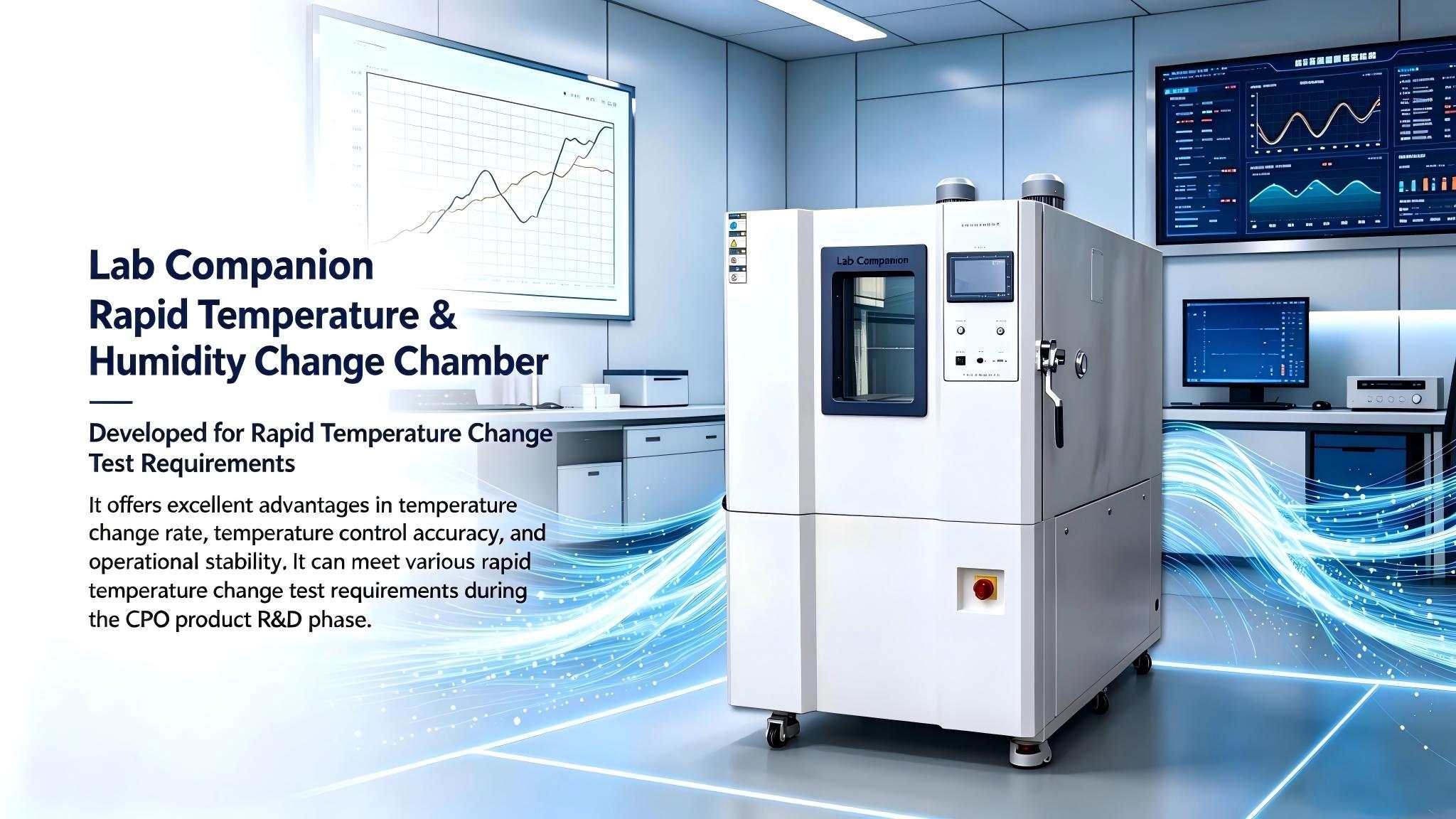
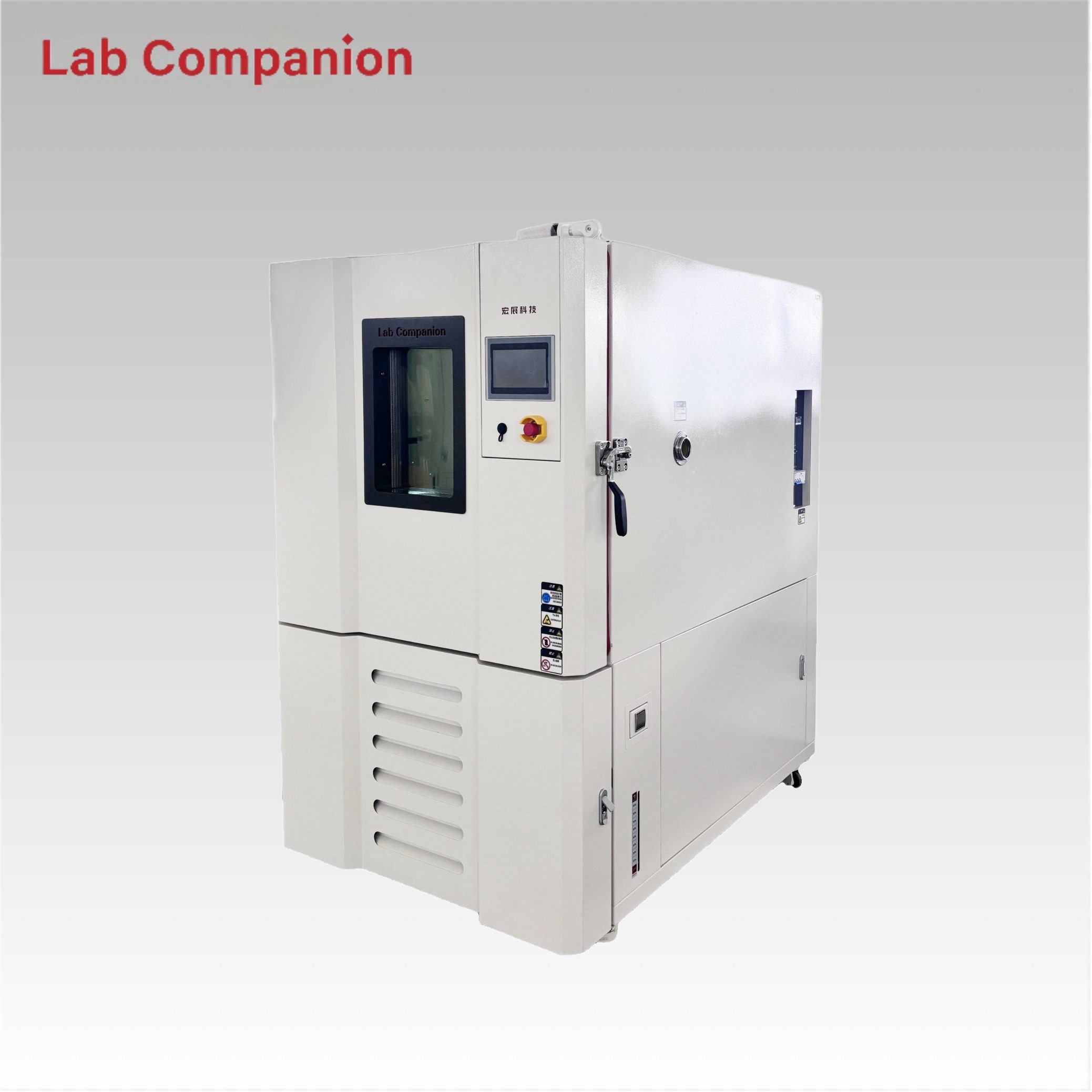
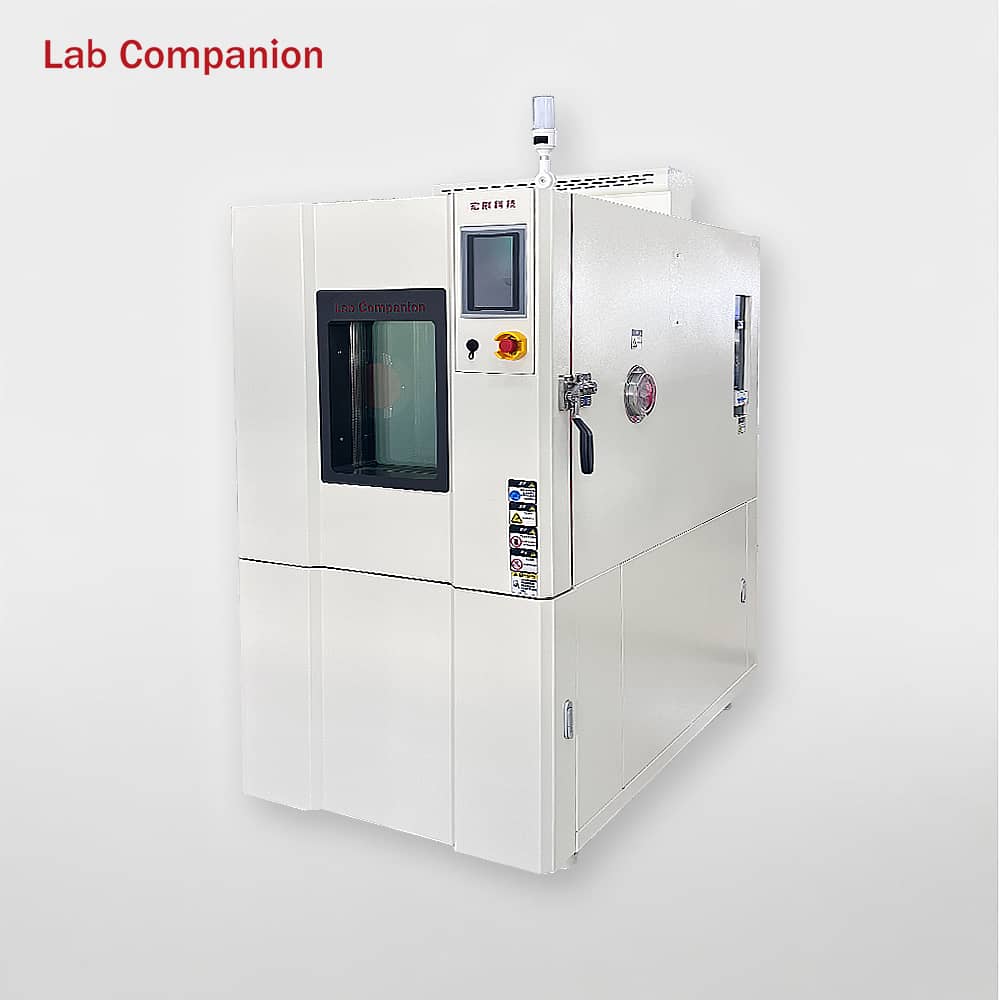
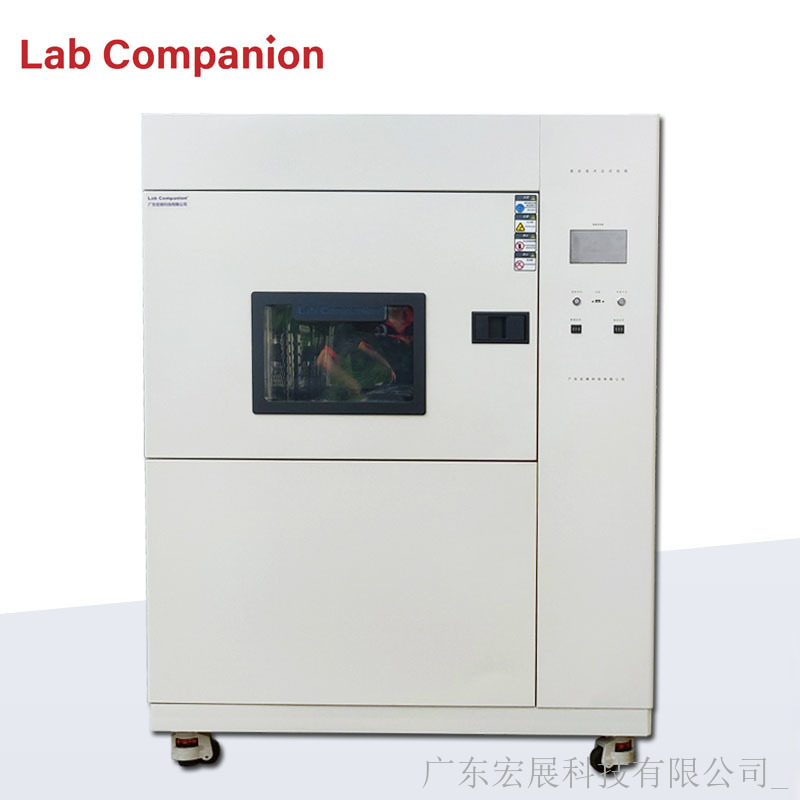
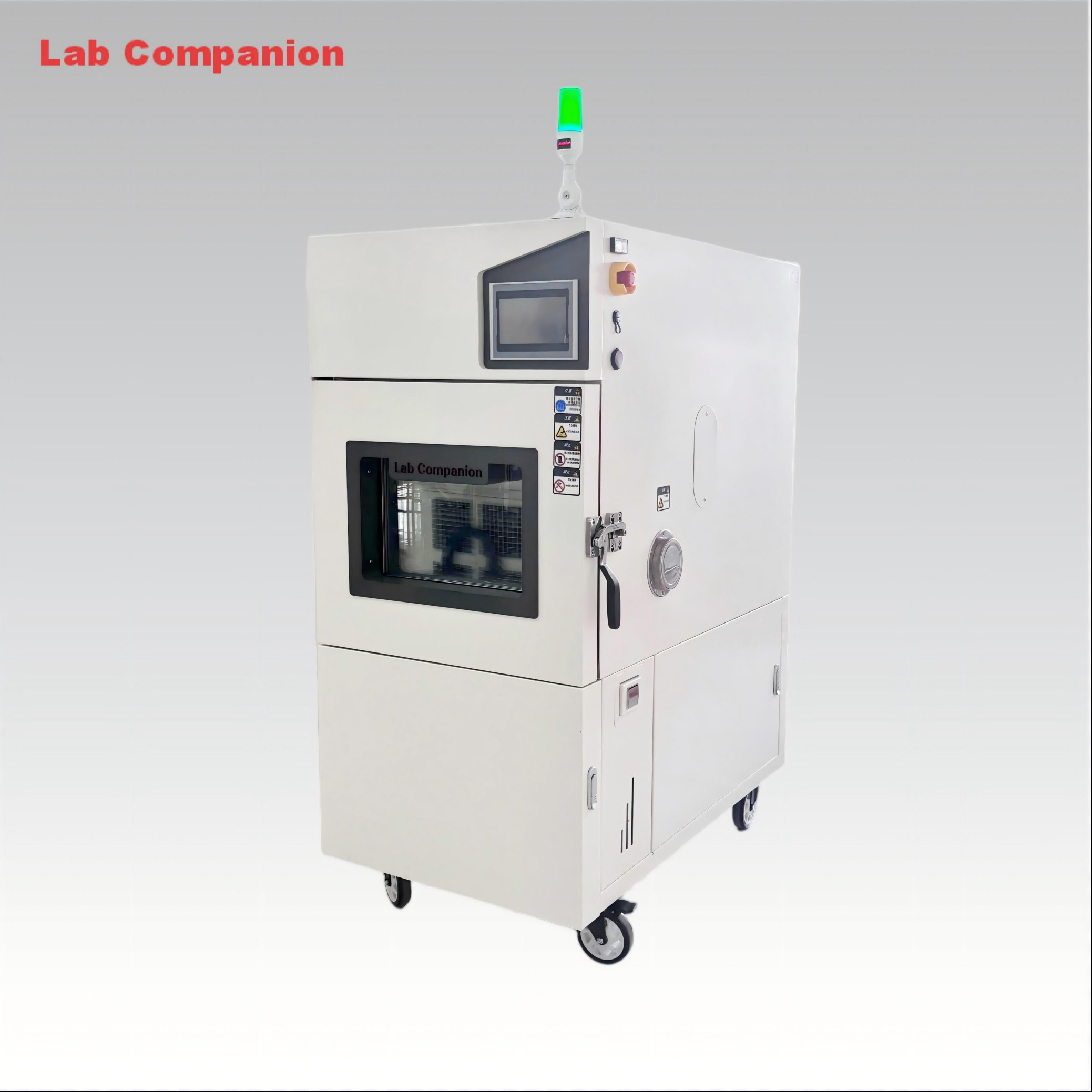
 見積もりを依頼する


 IPv6ネットワークをサポート